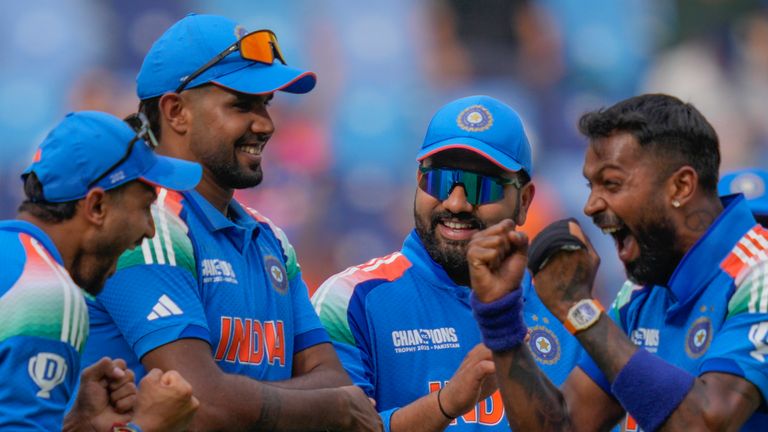
The cricket match between India and Pakistan is often referred to as the greatest sporting
rivalry, yet this old story ignores the ugly truth. It is not a sporting contest; it is a highly
commodified and politically charged performance art, where national pride rests on every ball
bowled. Cricket has abandoned all notions of ‘cricket diplomacy,’ and has become a signifier of
war, as the language of sport has been violently supplanted by the language of war. ” Crashing
planes’, gunshots with bat: India Pakistan game was all except cricket.”
A 22-Yard War Zone
As soon as the two teams walk onto the field, the geostrategic friction is Morales and athletes
have made it clear – one way or another all 22 men will become soldiers for their country. All
recent matches have confirmed this may be the case. What is truly disturbing is seeing players
displaying political and/or military-related gestures – whether it is something resembling a ‘6-0’
signal referencing disputed military claims or the gun-salute celebration that did not go
embraced by everyone or worthy of much ridicule. These blatant insults to sportsmanship turn
the sporting arena into an active battlefield of sorts where we are not measuring score or run
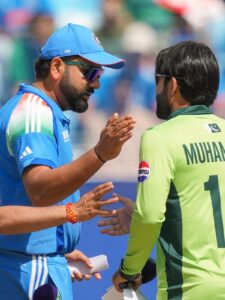
rate but imputations of nationalistic zeal. The previous oh so great tradition of a pre-game
handshake by all players is finished, abandoned for cold shoulders and public boycotts. For
these two countries, disdain is more important now than the entirety of the game’s intent.
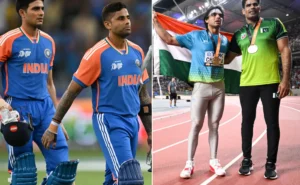
The Peril of Performance: Players as Political Pawns
The pressure these athletes endure is distinctive and inherently unfair. They are not just playing
to win; they are playing to affirm the political position of a nation, thus being high stakes political
pawns. The overanalysis of every dropped catch or missed run-out turns every on-field act into
a national catastrophe and results in the psychological hysteria of fans. We witness a match in
temper, not simply from competitiveness, but from the remarkable strain of carrying the pride of
a nation of over a billion people. The emotional exchanges and bits of trash talk, which often
draw the intervention of umpires, are a sign of an environment in which losing a sporting match
is in fact curling. This excessive pressure relieves the joy of sport and concludes high
performance with surviving from the outside push of expectation.
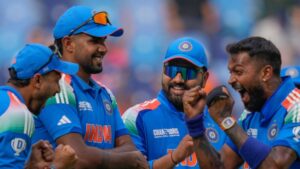
The Theatre of the Absurd: Hysteria and the Fanatic
The tremendous popularity of the match is not a tribute to cricket’s inherent beauty; it is the
commercialization of nationalism. Media organizations from both sides are making a fortune by
perpetuating the intense rivalry and narrating every delivery as a moment of existential anguish.
The enthusiasm creates a scene where the crowd’s behavior tends toward the toxic, caused by
political gesturing, such as the “crashing planes” gesturing by players, who are reacting to
taunts, jeers, and politically driven chants from the stands. The boundary between passionate
support and genuine hate disappears, turning the stadium into a gloomy stage of absurdity. The
match is a spectacle to the world, and an ugly spectacle at that, telling a story of the raw and
unadulterated hatred between two nations with nuclear weapons, albeit under the thin guise of a
gentleman’s game. The whole event is then bigger than the actual sport historically, and even
bigger in the most unfortunate way.
The Ugly Truth Behind the ‘Goodwill’
The relentless narrative of “cricket diplomacy” is now merely a historical anecdote—a delightful
fiction that the international sports community tells itself to justify the immense revenue
generated by this situation. The truth is that a modern India-Pakistan cricket match is a failure of
sport and a full-blooded triumph of political theatre. It sets a dangerous precedent of the
normalisation of military propaganda with a sporting contest. Until both nations treat the fixture
as sport and not a stand-in for geopolitical conflict, it is going to remain a combustible and
problematic spectacle. The true tragedy is that in this high-stakes, emotion-fuelled contest, the
only thing missing is a game of cricket.
About the Author