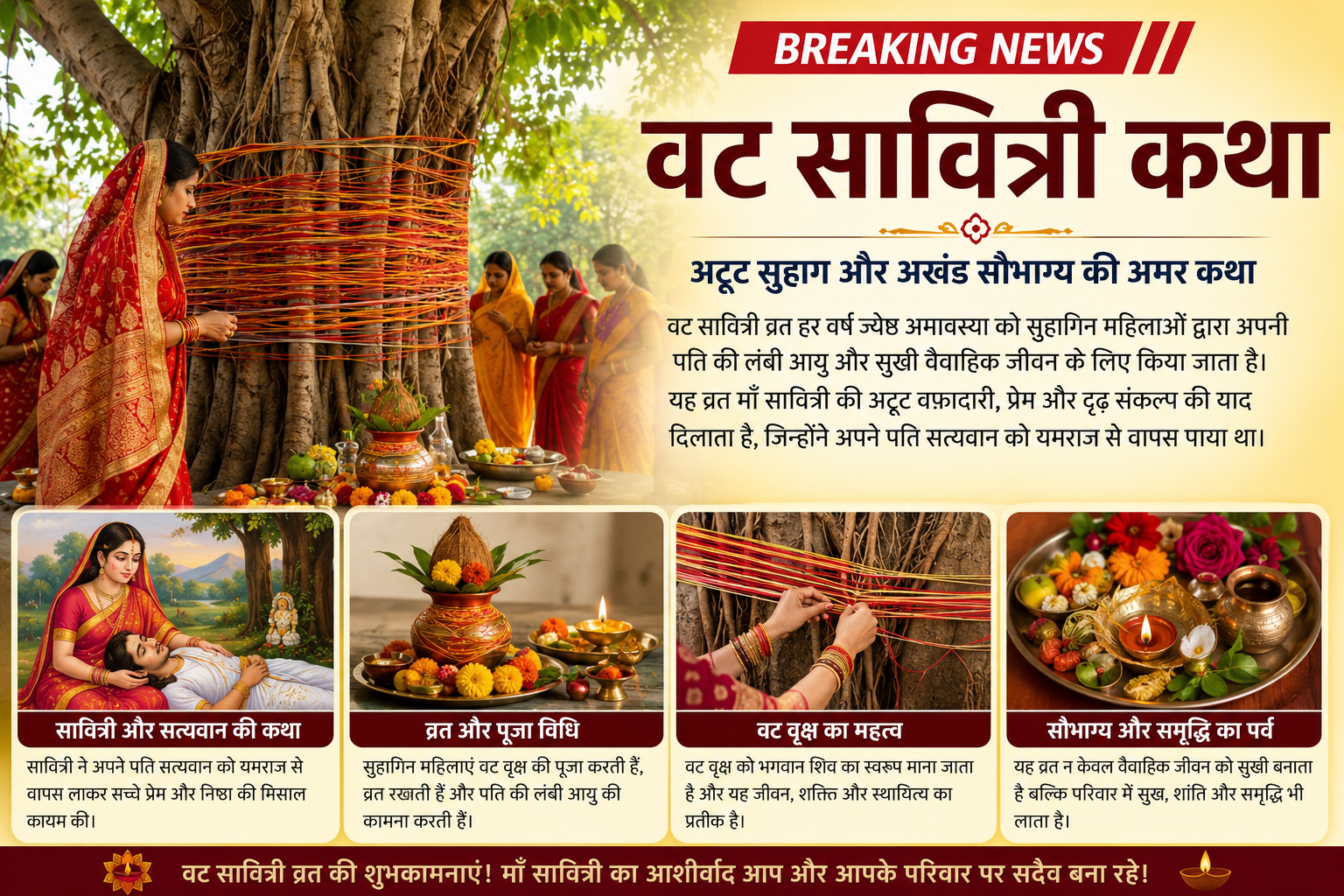
As the sacred festival of vat savitri katha begins across different parts of India, married women are observing the traditional fast with immense devotion and spiritual faith. From Maharashtra to Bihar, Uttar Pradesh to Gujarat, temples and homes are witnessing early morning rituals, prayers around banyan trees, and recitations of the powerful Savitri-Satyavan Katha.
The festival, deeply rooted in Hindu traditions, symbolizes unwavering love, loyalty, and prayers for the long life and well-being of husbands. People are flooding social media platforms with festive visuals, traditional saree looks, puja thalis, and spiritual messages, making Vat Savitri one of the most discussed Hindu observances this season.
Experts believe searches related to “Vat Savitri Katha”, “Vat Savitri Puja Vidhi”, and “Vat Savitri Vrat significance” have sharply increased as devotees prepare for the auspicious day.
What Is Vat Savitri Vrat?
Vat Savitri Vrat is a highly respected Hindu fasting ritual observed mainly by married women. The vrat is dedicated to Goddess Savitri, who is considered a symbol of strength, devotion, wisdom, and marital commitment.
Women observe a day-long fast and worship the banyan tree, also known as the “Vat Vriksha”, which represents longevity and stability in Hindu beliefs. The banyan tree is considered sacred because of its long life and continuous growth.
The festival is celebrated on different dates in various regions:
- In North India, it is commonly observed on the Amavasya (new moon day) of the Jyeshtha month.
- In Maharashtra, Gujarat, and some western states, it is celebrated as Vat Purnima on the full moon day.
Despite regional differences, the spiritual essence remains the same — praying for a happy, prosperous, and long married life.
Complete Vat Savitri Katha
The sacred Vat Savitri Katha revolves around the legendary story of Savitri and Satyavan.
According to Hindu scriptures, Savitri was a devoted and intelligent princess who chose Satyavan as her husband despite learning from sages that he was destined to die within a year.
Even after knowing the prediction, Savitri married Satyavan and remained dedicated to him with complete faith and devotion.
Savitri accompanied him after observing a strict fast and intense prayers. While working in the forest, Satyavan suddenly became unconscious and passed away.
Soon after, Yamraj, the God of Death, appeared to take Satyavan’s soul.
Savitri followed Yamraj fearlessly and continuously requested him to return her husband’s life. Impressed by her intelligence, determination, and devotion, Yamraj offered her several boons — except the life of Satyavan.
Savitri wisely asked for the prosperity of her in-laws, blessings for her father, and eventually requested children for herself and Satyavan.
Yamraj granted the boon without realizing that for Savitri to have children, Satyavan had to be alive.
Realizing her wisdom and devotion, Yamraj finally restored Satyavan’s life.
Since then, devotees have worshipped Savitri as the ideal symbol of marital devotion and strength.
Vat Savitri Puja Vidhi (Rituals)
Women observing Vat Savitri Vrat usually begin preparations early in the morning.
Main Rituals Followed During Vat Savitri Vrat:
- Wake up before sunrise and take a holy bath.
- Wear traditional attire, preferably red, yellow, or bridal colors.
- Prepare a puja thali with:
- Kumkum
- Akshat (rice)
- Flowers
- Fruits
- Incense sticks
- Water pot
- Sacred thread
- Visit a banyan tree and offer water, flowers, and prayers.
- Tie sacred thread around the banyan tree while circling it multiple times.
- Listen to or recite the Vat Savitri Katha.
- Seek blessings for a happy married life and family prosperity.
Many women also avoid food and water throughout the day, while some follow a fruit-based fast depending on family traditions.
Spiritual Significance of the Banyan Tree
The banyan tree holds immense religious significance in Hindu culture.
Hindu beliefs represent the banyan tree as the Hindu Trinity:
- Brahma in the roots
- Vishnu in the trunk
- Shiva in the branches
Its ever-growing nature symbolizes immortality, stability, and protection.
Devotees believe that worshipping the banyan tree during Vat Savitri Vrat brings longevity, family happiness, and protection from difficulties.
Why Vat Savitri Vrat Is Trending Online
This year, Vat Savitri Vrat has become one of the top searched Hindu festival topics on Google and social media.
Several factors are contributing to the rising online buzz:
- Growing interest in traditional Indian festivals
- Viral videos of banyan tree puja rituals
- Searches for easy vrat recipes and fasting tips
- Demand for regional Vat Savitri Katha in Hindi and Marathi
- Celebrity festive looks and devotional content
Lifestyle creators and spiritual influencers are also sharing detailed puja guides, making the festival highly visible on platforms like YouTube, Instagram, and Facebook.
Vat Savitri Vrat Wishes
Here are some popular wishes devotees are sharing:
- “May Goddess Savitri bless your married life with happiness and prosperity.”
- “Wishing you strength, devotion, and endless blessings on Vat Savitri Vrat.”
- “May your family always stay protected and prosperous.”
Important Things Devotees Should Remember
- Follow rituals according to your family traditions.
- Keep the fasting practice manageable according to your health condition.
- Listen to the complete katha before concluding the puja.
- Respect the spiritual significance rather than focusing only on social trends.
Vat Savitri Vrat is much more than a traditional fast. It is a celebration of faith, commitment, patience, and spiritual strength that continues to inspire generations of women across India.
The timeless story of Savitri and Satyavan remains deeply connected with Indian culture and family values. As devotees gather around banyan trees and temples this festive season, the spirit of devotion and positivity continues to unite families and communities.
With rising interest on digital platforms and increasing Google searches around the festival, Vat Savitri Katha 2026 is once again becoming a major cultural and spiritual talking point across the country.
About the Author