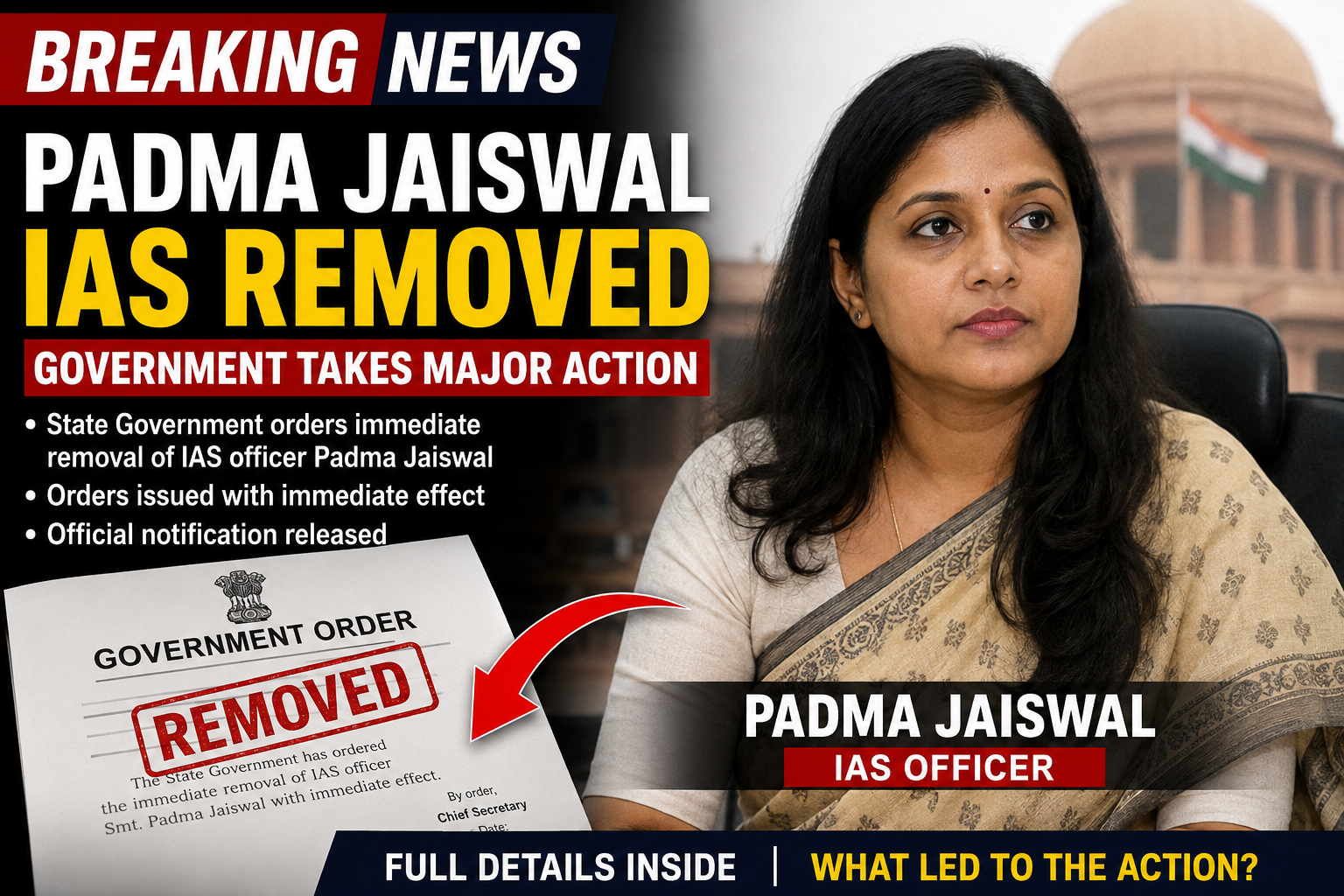
New Delhi: In a major development that has triggered fresh debate across India’s administrative and political circles, the Central Government has reportedly removed senior IAS officer Padma Jaiswal from service over long-pending corruption allegations. The action, considered rare in India’s civil services system, has quickly become one of the most talked-about breaking news stories online.
Padma Jaiswal, a 2003-batch AGMUT cadre officer, was serving as Special Secretary in Delhi government’s Administrative Reforms Department before the latest development surfaced. Reports suggest the disciplinary proceedings were linked to allegations dating back nearly two decades during her tenure in Arunachal Pradesh.
The Centre’s decision has created significant buzz across social media platforms, with users questioning the long delay in the inquiry while others called the move a strong message against corruption within the bureaucracy.
Why Was Padma Jaiswal Removed?
According to reports, the case against Padma Jaiswal traces back to 2007-08 when she was posted as Deputy Commissioner of West Kameng district in Arunachal Pradesh. Allegations of misuse of office and financial irregularities reportedly led to disciplinary action.
Sources indicate that the Ministry of Home Affairs initiated proceedings under the All India Services (Discipline and Appeal) Rules. Over the years, authorities conducted multiple legal and administrative reviews before senior officials reportedly approved the final action.
Officials familiar with the matter described the removal as an “exceptional administrative action,” especially considering the seniority of the officer involved.
Padma Jaiswal Responds to Reports
Soon after reports of her removal surfaced, Padma Jaiswal reportedly said that authorities had not informed her about any dismissal order.Her response added another layer of uncertainty to the already high-profile case.
The statement has intensified public interest, with many closely watching for an official clarification or legal response in the coming days.
Rare Move Against Serving IAS Officer
Administrative experts say such actions against serving IAS officers are uncommon and usually come after lengthy departmental inquiries. The development has once again highlighted how disciplinary proceedings within India’s civil services often stretch over several years before reaching a conclusion.
Political observers believe the case could reignite conversations around accountability, transparency, and reforms within India’s bureaucratic structure.
Political and Public Reactions Grow
The news of Padma Jaiswal’s removal rapidly gained traction online, especially across Delhi, Arunachal Pradesh, and administrative circles. Several users on social media called the action a “strong anti-corruption message,” while others questioned why the case took nearly 18 years to conclude.
The controversy will also trigger political reactions in the coming days as opposition leaders and policy experts weigh in on the case.
Impact on Delhi Administrative Circles
As Padma Jaiswal was recently serving in the Delhi government, the development has drawn attention within the capital’s bureaucratic setup. Officials are now monitoring whether the case may lead to wider scrutiny of pending disciplinary matters involving other officers.
Experts believe the case could push authorities to speed up long-pending vigilance investigations and disciplinary reviews.
Why This Story Is Trending on Google Discover
The Padma Jaiswal IAS removal story has emerged as a high-interest topic due to its combination of bureaucracy, corruption allegations, and rare disciplinary action against a senior civil servant. Readers across India are actively searching for updates, background details, and official reactions.
The story has also gained traction because it involves multiple regions including Delhi, Arunachal Pradesh, and the AGMUT cadre administration.
Conclusion
The removal of Padma Jaiswal from service marks a significant moment in India’s administrative landscape. While the full legal and political implications are still unfolding, the case has already sparked nationwide attention.
As people continue questioning accountability, delayed disciplinary processes, and transparency within the bureaucracy, the controversy surrounding Padma Jaiswal will likely dominate headlines in the coming days.
As more official statements and documents emerge, the story could develop further and potentially influence discussions around governance reforms and anti-corruption mechanisms in India.
About the Author