The tale of Indian fashion is one that is full of life and has great depth, a true textile of deep
heritage, cultural identity, and world influences. It is a story of resistance, revolution, and
relentless self-expression. From the simplicity of homespun khadi during the freedom struggle,
to the avant-garde couture appearing on international runways, Indian fashion has come a long
way. Each decade marks a new chapter in India’s social, political, and economic progression.
The 1940s: An Era of Simplicity and Patriotism
In the 1940s, fashion in India was very much interwoven into the country’s independence
struggle. Mahatma Gandhi’s call for swadeshi (self-reliance), brought khadi to the forefront,
serving as both a political statement and as a powerful symbol of nationalism. Fashion was no
longer excessive; it was about dignity, simplicity, and rejecting foreign-made products. Women
mostly wore muted-coloured handloom sarees, while men wore simple cotton kurtas and dhotis.
The clothing was all practical and modest, with a focus on innovative textiles and craftsmanship.
This era helped to create a renewed pride in Indian culture, which would all impact fashion for
decades to come.
The 1950s: The Rise of Cinematic Glamour
Following independence, the 1950s embraced a glamorous look largely influenced by the
golden age of Bollywood. Stars like Madhubala, Nargis, and Meena Kumari became national
fashion icons. The saree was also reinterpreted to signify romance and sophistication. They
wore sheer, full-sleeve, elegant chiffon sarees in rich colors and stylish blouses often sleeveless
or tailored, balancing modesty and allure. The cinematic industry influenced hairstyles, makeup,
and the manner in which the saree was draped. The years of the 1950s established Bollywood’s
power as a trend setter that continues today.
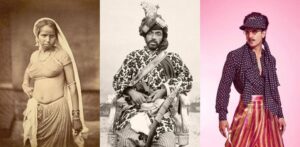 The 1960s: The Hippie and Fusion Revolution
The swinging sixties heralded an influx of Western fashions into India and an influx of
experimentation and rebellion. The hippie movement from the West accelerated the mingling of
Eastern and Western styles. Young women adopted bell-bottom pants, psychedelic prints, and
miniskirts, which coexisted with their salwar kamees. Actresses such as Sharmila Tagore and
Sadhana popularized bouffant hairstyles and wings for eye makeup. The decade was
characterized by wild prints, bright colors, bohemian-chic, free-flowing silhouettes, and Indian
textiles made into modern Western cuts. The new bohemian aesthetic paved the way for
Indo-western modern hybridization, which would later become a global mode of fusion.
The 1970s & 1980s: Boldness and the Birth of the Designer
The 1970s and 80s were a time of daring styles. The disco movement led to a love of sequins,
shiny fabrics, and metallics, while bell-bottoms and high-waisted trousers became standard for
men and women. The saree was reinvented yet again, with actresses like Zeenat Aman making
sheer chiffon sarees with minimal blouses chic. More importantly, it was the decade when the
Indian fashion designer was born. Designers such as Rohit Khosla and Tarun Tahiliani opened
`Ensemble`, the first multi-designer boutique, in 1987, which was a landmark moment that
professionalized the industry and introduced ‘designer wear’ to sophisticated shoppers and also
created a milieu for high fashion outside of films and film costumes.
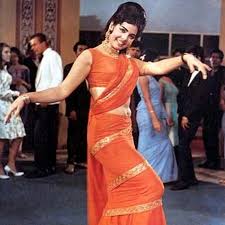 The 1990s: Liberalization and the Power of the Salwar Kameez
The 1990s were a time of great transformation, sparked by India’s economic liberalization in
1991. The arrival of satellite television and international brands introduced Indian consumers to
female fashion in ways never before possible. The salwar kameez, a flexible and comfortable
item of clothing, quickly became the de facto uniform of today’s Indian woman. Designers began
to create salwar kameez in modified cuts and drapes, using different kinds of fabrics. Fashion
colleges were established; there was an explosion of prêt-à-porter lines; the supermodel was
born; and films, such as Dilwale Dulhania Le Jayenge and Rangeela, made fashion a
cornerstone of identity for their characters.
The 2000s: Global Fusion and Casual Chic
The new millennium emphasized fusion. With globalization at hand, Indian designers exhibited
newfound confidence in integrating Indian craftsmanship into Western silhouettes. The saree
gown, dhoti pants, and pre-draped saree all came into prominence. The fashion industry swung
into a period of “bling,” with heavy embroidery, sequins, and Swarovski crystals becoming
commonplace in bridal and festive wear—a trend that was highly influenced by popular
blockbuster films. The ‘casual chic’ look gained momentum at the same time, with the everyday
kurta appearing in comfortable fabrics and paired with jeans or leggings, making it popular
among college students and working professionals. Fashion was becoming more personal than
a one-shoe-fits-all trend.
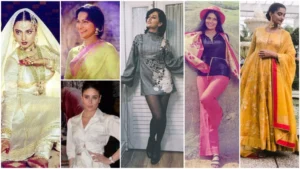
The 2010s to Today: Heritage, Sustainability, and the Digital Age
The current decade is an amazing intersection of the traditional with the technological. The
influence of social media and style influencers has started to democratize trends in a fast-paced
way. There is a significant global movement toward sustainable fashion that has sparked a
renewed sense of pride and enthusiasm in handlooms, India’s fascinating textile heritage.
Designers and shoppers are consciously supporting artisans and revitalizing traditional crafts
such as Banarasi brocade, Chikankari, and Kalamkari. Today’s narrative also involves
conscious consumption of fashion, gender-neutral clothing, and embracing the imperfections of
handmade garments. Ethnic fashions and Western clothing have finally converged in the
fashion world, with lehengas paired with sneakers, and sarees styled with power suits. This is
an exceptional moment for the journey of Indian fashion; a journey focused on tradition,
innovation, and self-expression.