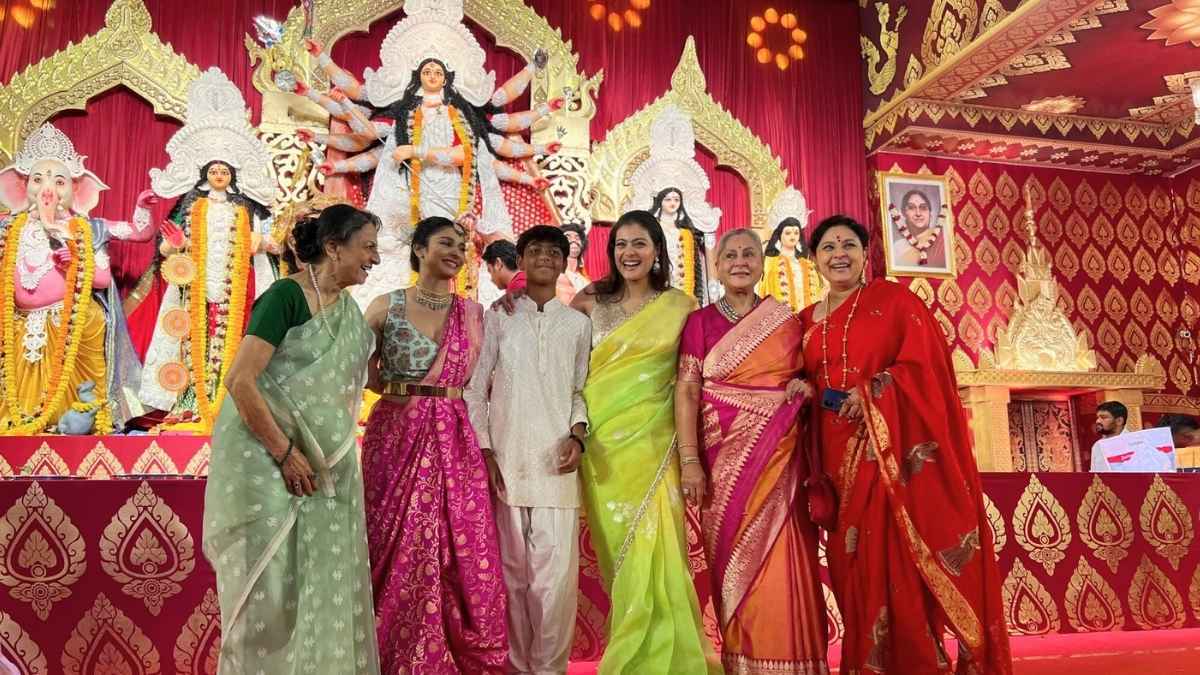
The annual Durga Puja hosted by the Mukerji family in Mumbai—the North Bombay
Sarbojanin Durga Puja—has evolved far beyond a religious gathering. It is now a powerful
cultural flashpoint where Bollywood’s brightest stars shed their professional personas to
embrace tradition. The 2025 celebration was marked by the convergence of film royalty and
television stardom, highlighted by the deeply resonant moment of Rupali Ganguly joining Rani
Mukerji in the sacred act of serving Bhog to thousands of devotees. This collective act of
service is a profound gesture that successfully bridges the gap between celebrity culture and
communal humility.

The Heartfelt Act of Serving Bhog: An Emotional Connect
Rupali Ganguly’s involvement, in particular, resonated strongly with her massive fan base.
Known for her powerful, traditional on-screen characters, seeing her in a traditional red-and-gold
handloom saree, personally serving the consecrated food—the khichuri and labra—to devotees,
was instantly viral. This gesture is essential to the spirit of the festival, reinforcing the value of
seva (selfless service). For a television star whose image is built on relatability, the act of
serving bhog adds a layer of authenticity and approachability, suggesting that even the most
famous personalities submit to the spiritual equality of the pandal. It is a moment where the
professional spotlight fades, and the actor is seen purely as a devotee performing a communal
duty.

The Mukerji Legacy: Roots and Reunion
The North Bombay Sarbojanin Durga Puja pandal, now 79 years old, is not just a venue; it is a
piece of Bollywood heritage. Founded in 1948 by filmmaker Sashadhar Mukerji, it has
historically been the epicenter for the Bengali film community in Mumbai. Rupali Ganguly’s
connection to the event is particularly poignant, as her late father, noted filmmaker Anil
Ganguly, was a dedicated member of the Puja committee. Her presence, alongside cousins
Rani Mukerji and Kajol, is a powerful representation of carrying forward a family and
community tradition. This year, the pandal saw an outpouring of emotional family reunions,
including the attendance of family members like Ayan Mukerji in what was an emotionally
significant celebration following the passing of a key family elder.

The Pandal as a Cultural Hotspot
The event’s guest list reads like a who’s-who of Indian cinema, featuring stars from multiple
generations including Alia Bhatt, Hrithik Roshan, Priyanka Chopra, and Jaya Bachchan. This
celebrity presence ensures the festival receives global attention, making the observance of
traditional rituals aspirational for millions. When an A-lister participates in Sindur Khela (the ritual
of applying vermillion), or a celebrity patiently queues for darshan, it validates the tradition for a
modern, globalized audience. This convergence of glamour and devotion makes the pandal a
truly unique cultural hotspot, blending the sophisticated fashion statements (like Rani Mukerji’s
regal silk saree) with the timeless, simple acts of community service that are the true essence of
the festival.

The Enduring Cultural Impact
Ultimately, the image of celebrity serving the community is a powerful example of how Indian
cinema, despite its modernization, remains deeply rooted in the nation’s spiritual fabric. These
moments—from the warm embrace between Rani and Rupali, to the collective singing of the
aarti—create a public narrative of shared values. The stars become cultural ambassadors,
lending their considerable influence to promote faith, community, and the simple beauty of
tradition. This year’s Durga Puja, with its blend of star-studded attendees and deeply felt acts of
service, reaffirms that the spirit of Maa Durga successfully transcends the boundaries between
reel life and real devotion.
About the Author