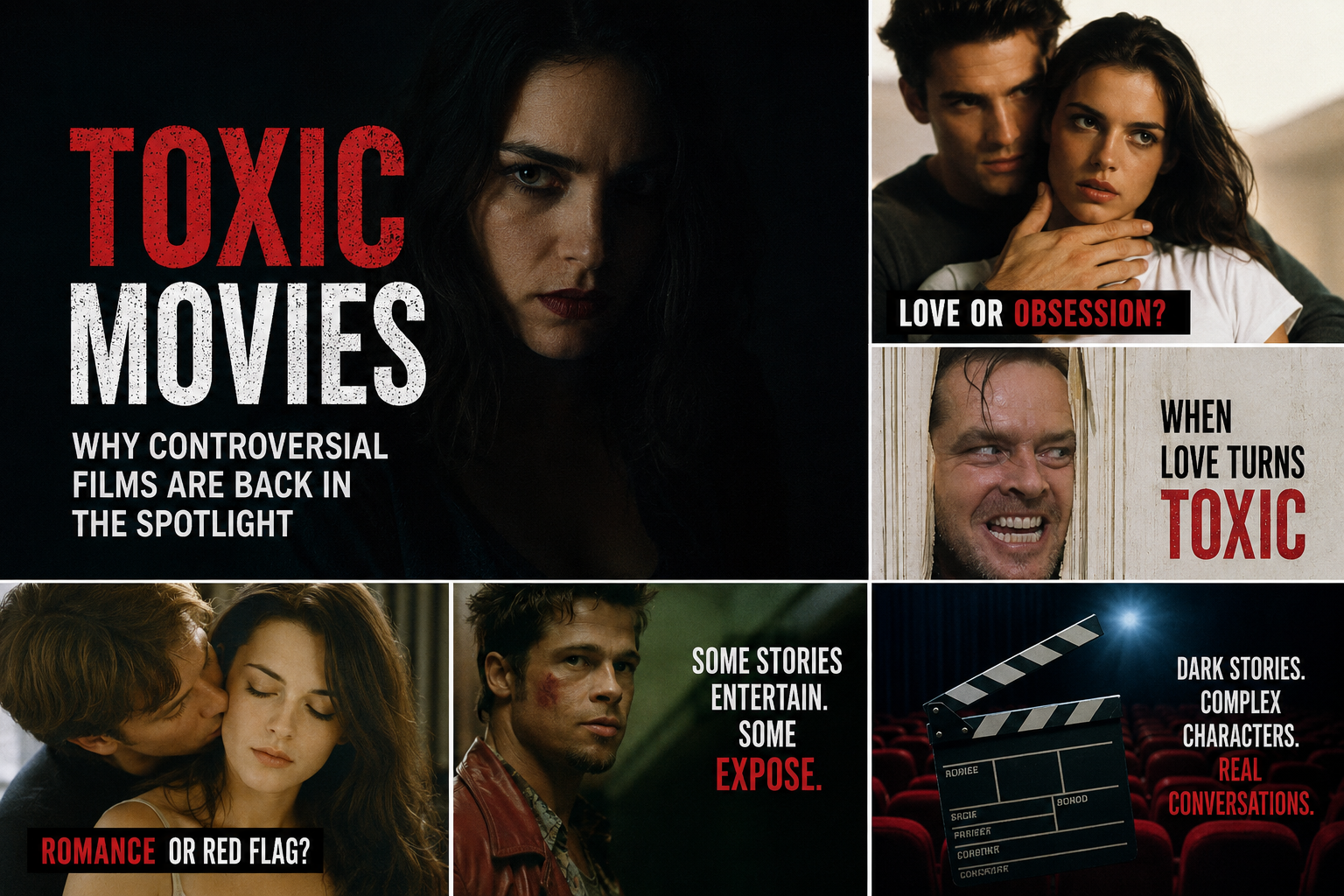
Toxic Movies Are Trending Again as Viewers Debate Cinema’s Most Disturbing Stories
A fresh debate is erupting online around so-called “toxic movies” films known for disturbing relationships, emotional manipulation, obsessive love, violence, betrayal, and deeply uncomfortable storylines.
From psychological thrillers to dark romances and controversial dramas, audiences are revisiting films that leave viewers asking one important question: Where does entertainment end and toxic behavior begin?
The conversation has gained momentum as social media users, film communities, and younger audiences continue to re-examine older movies through a modern lens. Viewers once considered these scenes romantic, dramatic, or simply entertaining, but they now criticize them for normalizing manipulation, possessiveness, stalking, emotional abuse, and unhealthy relationships.
What Are Toxic Movies?
The term toxic movies does not refer to an official film genre. Instead, it has become a popular online label for movies that feature destructive behavior, unhealthy relationships, disturbing obsessions, and characters whose actions can be emotionally damaging or morally questionable.
These films often explore themes such as:
- Toxic relationships
- Obsession and possessiveness
- Emotional manipulation
- Psychological abuse
- Revenge
- Jealousy
- Betrayal
- Stalking
- Dark romance
- Violent relationships
While many viewers are drawn to these stories because of their intense emotions and dramatic storytelling, others argue that some films blur the line between portraying toxic behavior and romanticizing it.
Why Are Toxic Movies Trending Right Now?
The renewed interest appears to be connected to changing conversations about relationships and mental well-being.
Audiences today are more likely to recognize behaviors such as gaslighting, emotional manipulation, love bombing, control, and obsession. As a result, viewers are returning to older films and questioning whether certain characters were ever truly “romantic heroes.”
That shift has made toxic movies one of the most talked-about themes in online film discussions.
The Dark Side of Romanticizing Toxic Relationships
One of the biggest concerns surrounding toxic movies is the way unhealthy behavior can sometimes be presented as love.
In many dramatic stories, obsession is framed as devotion. A controlling partner may be portrayed as protective. Jealousy may be treated as proof of deep love. Characters who repeatedly cross boundaries can sometimes be rewarded with a happy ending.
This storytelling formula is now receiving greater scrutiny.
Viewers are increasingly questioning whether movies have contributed to unrealistic expectations about romance. While films are fictional, repeated portrayals of toxic behavior as passionate love can influence how audiences, especially younger viewers, interpret relationships.
That does not mean controversial films should disappear. Instead, many critics argue that audiences should be encouraged to watch them with greater awareness and context.
Dark Movies Can Still Tell Important Stories
Not every movie featuring toxic characters is itself promoting toxic behavior.
In fact, some of cinema’s most powerful stories focus on destructive relationships precisely because they expose their consequences. Psychological thrillers, crime dramas, dark romances, and character studies often explore the darkest parts of human behavior.
The difference, according to many viewers, lies in how the story presents those actions.
Does the movie challenge toxic behavior? Or does it celebrate it?
Does the character face consequences? Or is manipulation presented as a sign of true love?
These questions have become central to the modern debate around toxic movies.
Social Media Is Changing How People Watch Films
The rise of short-form videos and online discussions has changed the way audiences revisit movies.
A single scene can suddenly go viral years after a film’s original release. Users may analyze dialogue, character behavior, relationship dynamics, and hidden meanings in ways that were not part of the original public conversation.
This has created a new wave of interest in older and controversial films.
Some viewers are discovering movies for the first time, while others are rewatching familiar favorites with completely different opinions.
Why Toxic Movies Continue to Attract Audiences
Despite the controversy, dark and toxic stories remain popular because they explore intense human emotions.
Love, obsession, jealousy, anger, betrayal, and revenge are powerful storytelling tools. They create tension and keep audiences emotionally invested.
For many viewers, watching a toxic relationship unfold on screen is also very different from experiencing one in real life. Fiction allows people to explore dangerous, complicated, and uncomfortable situations from a safe distance.
That is why controversial films often continue to generate discussion long after their release.
The Bigger Question: Are Toxic Movies Entertainment or a Warning?
The debate around toxic movies is unlikely to end anytime soon.
Some audiences believe these films normalize harmful behavior, while others argue that filmmakers should have the freedom to explore uncomfortable subjects without audiences treating fiction as an endorsement.
The individual film and the way filmmakers tell its story may reveal the truth.
What is clear is that audiences are watching differently now.
Viewers are becoming more aware of red flags in fictional relationships and more willing to question the characters they once admired. That changing perspective is giving new life to old movies and creating a fresh wave of debate around some of cinema’s most controversial stories.
About the Author