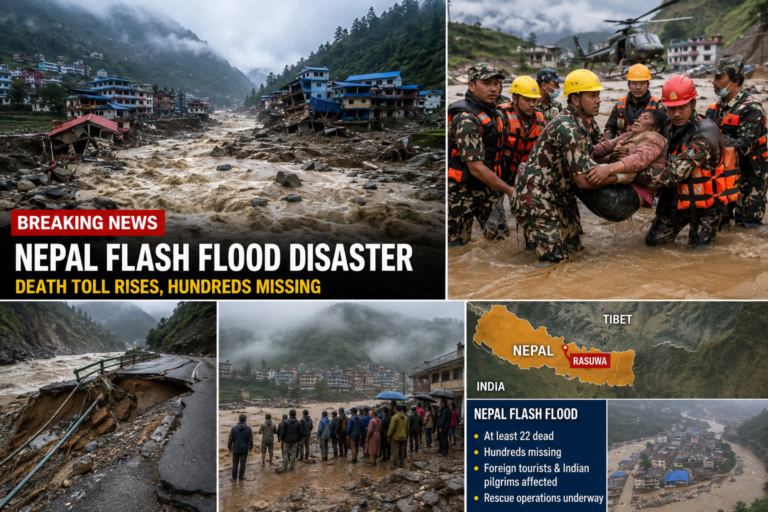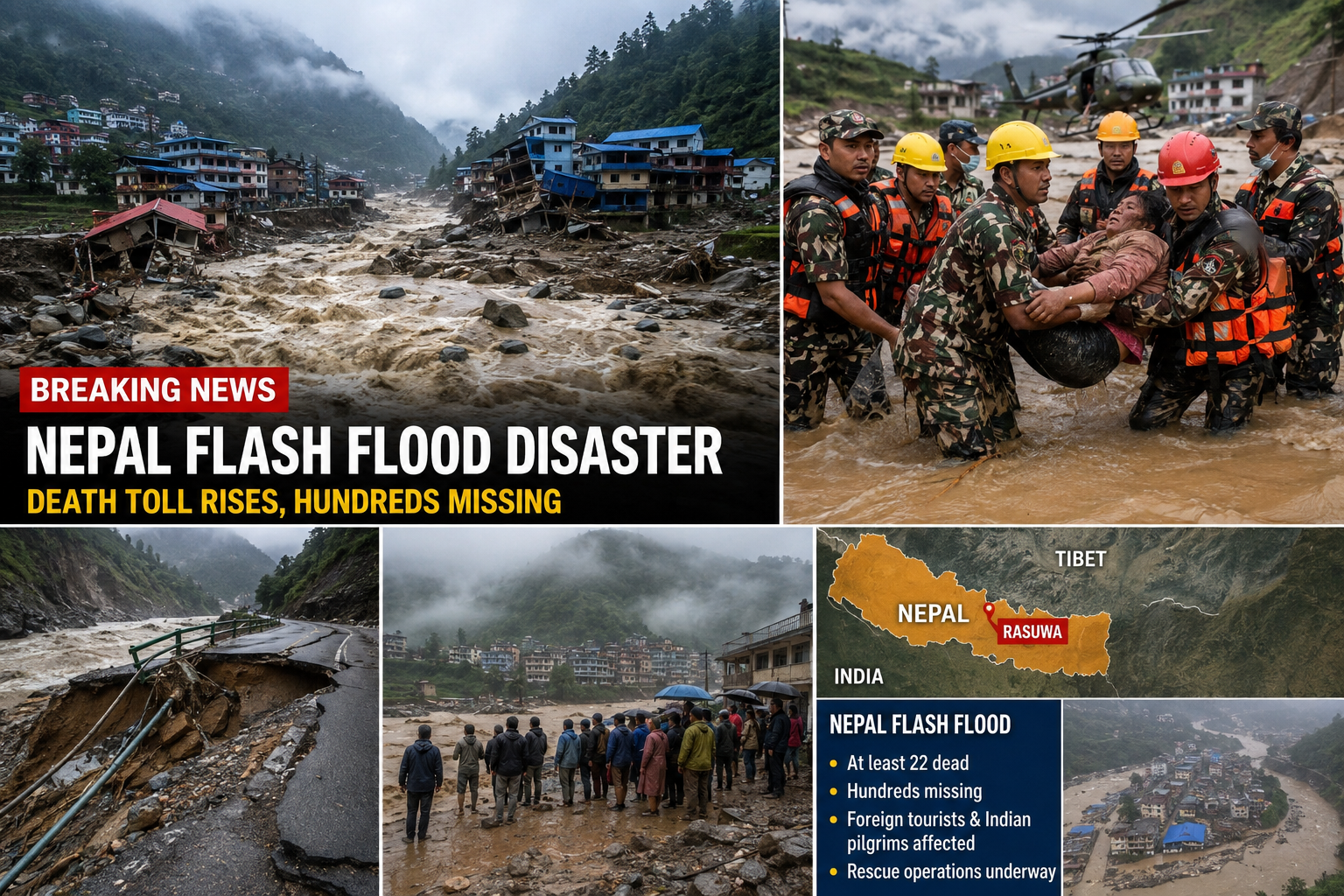
A devastating flash flood has swept through northern Nepal Flash Floods near the Tibet border, leaving a growing number of people dead and hundreds missing in one of the region’s most destructive disasters in recent months.
The sudden flood tore through settlements in Nepal’s Rasuwa district on Wednesday, damaging homes, roads, bridges, markets and hydropower infrastructure. Rescue teams are continuing search operations as authorities struggle to assess the full scale of the destruction.
The disaster has also raised serious concerns in India after authorities reported a large number of foreign travellers, including Indian pilgrims heading towards Mount Kailash, as missing.
Death Toll Climbs as Rescue Operations Intensify
The death toll from the Nepal flash flood has continued to rise, with authorities confirming at least 22 deaths in the latest updates. As many as 384 people, including 291 foreign nationals, were reported out of contact, according to information released by Nepal’s tourism authorities.
Nepalese rescue teams have managed to save dozens of people, but poor weather, damaged roads and communication failures are slowing emergency operations.
Helicopters, the Nepali Army, Armed Police Force and Nepal Police have been deployed across the affected areas. However, several rescue flights have faced disruption due to dangerous weather conditions and limited access to remote Himalayan locations.
The flood has hit riverside communities in Rasuwa and neighbouring Nuwakot district particularly hard, with reports of entire settlements suffering severe destruction.
How Did the Nepal Flash Flood Begin?
Initial assessments suggest that the disaster may have been triggered by an ice avalanche and a blockage in the Lhende River on the Tibetan side of the border.
Scientists and officials are still investigating the exact cause.
The blockage is believed to have caused a sudden release of water, sending a massive surge downstream into the Bhotekoshi River. The powerful floodwaters then swept through Nepalese settlements with little warning.
The scale and speed of the flooding have made the disaster especially dangerous for residents, workers and travellers in the Himalayan region.
Hundreds of Tourists Missing, Including Indian Travellers
The crisis has taken an international dimension as hundreds of tourists remain unaccounted for.
Many of the missing people were travelling through Nepal for the Mount Kailash pilgrimage route, a journey that attracts visitors from India and several other countries.
Indian nationals are among those reported missing, raising concerns among families and authorities in India. c
The number of missing people remains a developing figure, and authorities are working to verify identities and establish contact with stranded groups.
Villages, Roads and Bridges Swept Away
The Nepal Flash Floods has caused widespread infrastructure damage across northern Nepal.
Flash waters have washed away several roads and bridges, cutting off communities and making rescue operations more difficult. Floodwaters have also caused heavy losses in market areas and riverside settlements, while damaging security posts and hydropower facilities.
The disaster has disrupted a key route linking Nepal with the China border, adding to concerns about trade, transportation and emergency access.
Officials have warned that damaged communication networks are making it difficult to gather accurate information from some of the worst-hit areas.
Nepal Authorities Issue River Warnings
Authorities have warned people living near major rivers to move to safer areas and avoid riverbanks.
Concerns remain over possible downstream impacts along the Bhotekoshi, Trishuli and Narayani river systems.
Emergency teams are monitoring water levels while rescue agencies continue operations in flood-hit communities.
India Watches Nepal Flood Crisis Closely
The Nepal flash flood has become a major concern for India because of the number of Indian travellers and pilgrims affected by the disaster.
Authorities are working to gather updated information on missing Indian nationals, while families across the country wait for confirmation about the safety of their relatives.
The situation remains highly fluid, with rescue teams still reaching remote areas.
Nepal Flash Flood: What We Know So Far
- Hundreds remain missing or out of contact.
- Foreign tourists and Indian travellers are among those affected.
- The flood devastated parts of Rasuwa and neighbouring districts.
- Poor weather and communication failures are affecting rescue operations.
- Initial assessments point to an ice avalanche and river blockage as a possible trigger.
- Authorities have warned people near downstream rivers to stay alert.
A Disaster Still Unfolding
The full scale of the Nepal flash flood disaster is still emerging.
With rescue operations continuing and communication links damaged in several areas, officials warn that casualty and missing-person figures could change as more information becomes available.
For now, attention remains focused on reaching stranded communities, locating missing travellers and helping families affected by the sudden Himalayan disaster.
About the Author