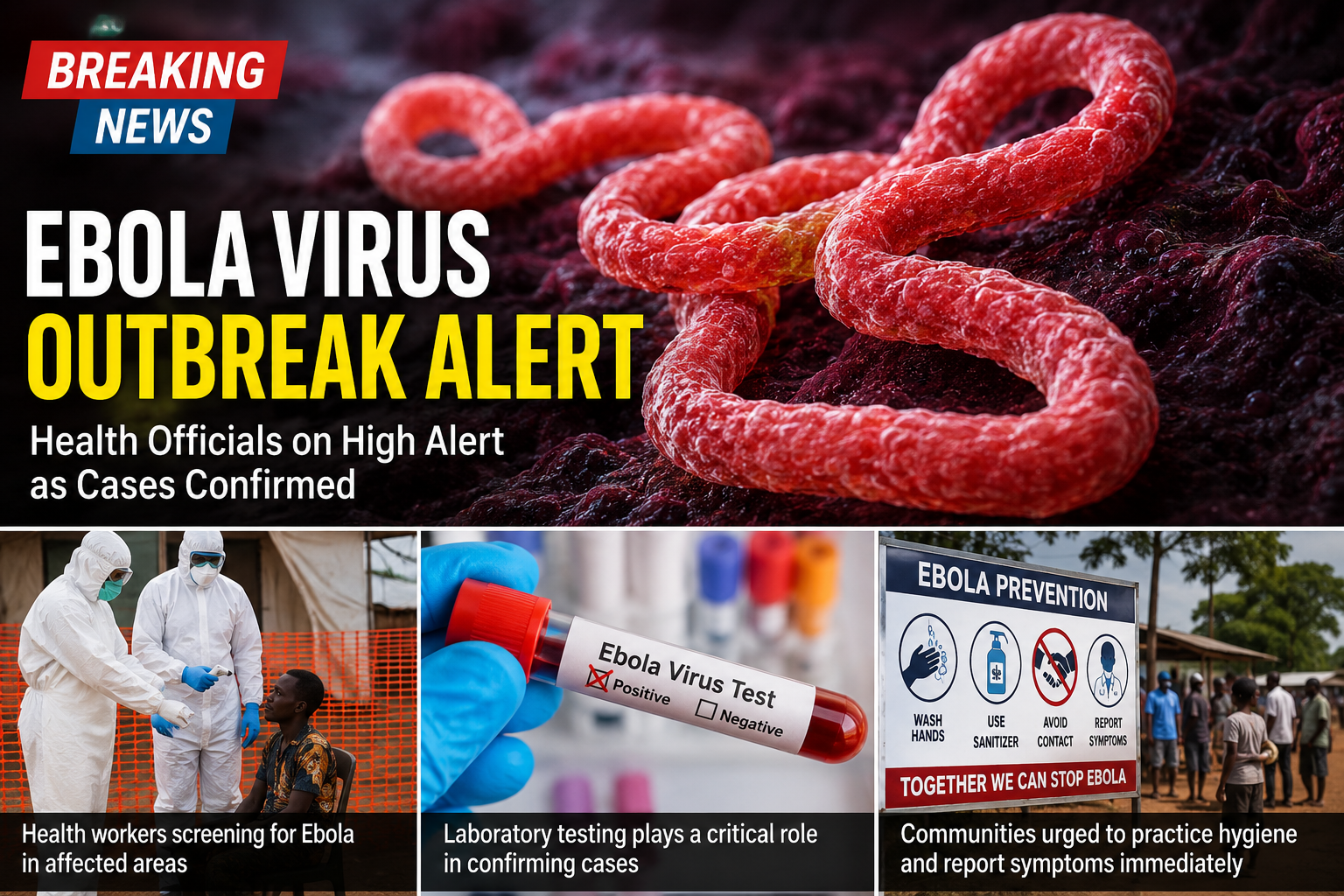
The World Health Organization (WHO) has officially declared the latest Ebola virus outbreak in Central Africa a “Public Health Emergency of International Concern,” triggering global concern as the deadly virus continues spreading across parts of the Democratic Republic of Congo (DRC) and neighboring Uganda.
Health officials confirmed that the outbreak involves the rare Bundibugyo strain of Ebola, a dangerous variant that currently has no approved vaccine or targeted treatment. The announcement comes after dozens of deaths and hundreds of suspected infections were reported in affected regions.
Ebola Cases Continue to Rise Across Central Africa
According to international health agencies, the outbreak has already claimed more than 80 lives, while over 240 suspected cases are being investigated in Congo’s Ituri province. Uganda has also confirmed imported cases linked to cross-border movement, raising fears of wider regional transmission.
Medical experts warn that the outbreak may have spread silently for weeks before authorities officially identified the virus. Several health workers and local communities are now under emergency monitoring as contact tracing efforts intensify.
The WHO says the situation is particularly concerning because the Bundibugyo strain is less understood compared to previous Ebola variants. Unlike the Zaire strain, which has approved vaccines, this version of the virus currently lacks proven immunization options.
Why the WHO Declared a Global Health Emergency
The declaration by the WHO is designed to mobilize international support, increase medical funding, and strengthen cross-border surveillance before the outbreak escalates further.
Global health officials say multiple factors influenced the emergency decision, including:
- Rapid rise in suspected Ebola cases
- Cross-border infections between Congo and Uganda
- Limited healthcare infrastructure in outbreak zones
- Population movement through mining towns and urban centers
- Lack of approved vaccines for the Bundibugyo strain
The emergency status does not mean the outbreak is a global pandemic, but it signals a high level of international concern and the urgent need for coordinated action.
What Is the Ebola Virus?
Ebola is a severe and often deadly viral disease that spreads through direct contact with bodily fluids from infected individuals or contaminated surfaces. The virus can cause fever, fatigue, vomiting, diarrhea, and in severe cases, internal bleeding and organ failure.
Health authorities say early detection remains critical in stopping transmission. Ebola outbreaks have historically carried high fatality rates, especially in regions with limited medical resources.
Experts are urging people in affected areas to avoid physical contact with infected individuals, report symptoms immediately, and follow official health advisories.
International Response Intensifies
In response to the escalating outbreak, emergency medical teams and supplies are now being deployed to affected regions in Congo and Uganda. Neighboring countries have also increased airport screenings and border surveillance to prevent additional spread.
Public health organizations across Africa are coordinating with the WHO to expand testing capacity, isolation facilities, and community awareness campaigns.
Meanwhile, scientists are racing to better understand the Bundibugyo strain and determine whether existing Ebola therapies can help reduce fatalities.
Could Ebola Spread Beyond Africa?
While health officials stress that the current risk outside Africa remains low, experts say international vigilance is necessary. Increased global travel and delayed detection could create challenges if containment measures fail.
Previous Ebola outbreaks have shown that rapid action, public cooperation, and international coordination are key to stopping widespread transmission.
For now, health authorities continue to monitor the situation closely as the outbreak evolves.
Final Word
The latest Ebola outbreak has once again placed global health systems on alert. With rising deaths, a rare virus strain, and no approved vaccine currently available for this variant, authorities are racing against time to contain the spread.
As emergency teams respond across Central Africa, the world is watching closely to see whether swift action can prevent another major international health crisis.
Sources indicate that the coming days will be critical in determining how far the outbreak may spread and how effective current containment efforts will be.
SEO Keywords
Ebola virus outbreak 2026, WHO Ebola emergency, Ebola cases in Congo, Uganda Ebola outbreak, Bundibugyo Ebola strain, Ebola virus breaking news, global health emergency, Ebola symptoms, WHO health alert, Ebola latest updates
About the Author