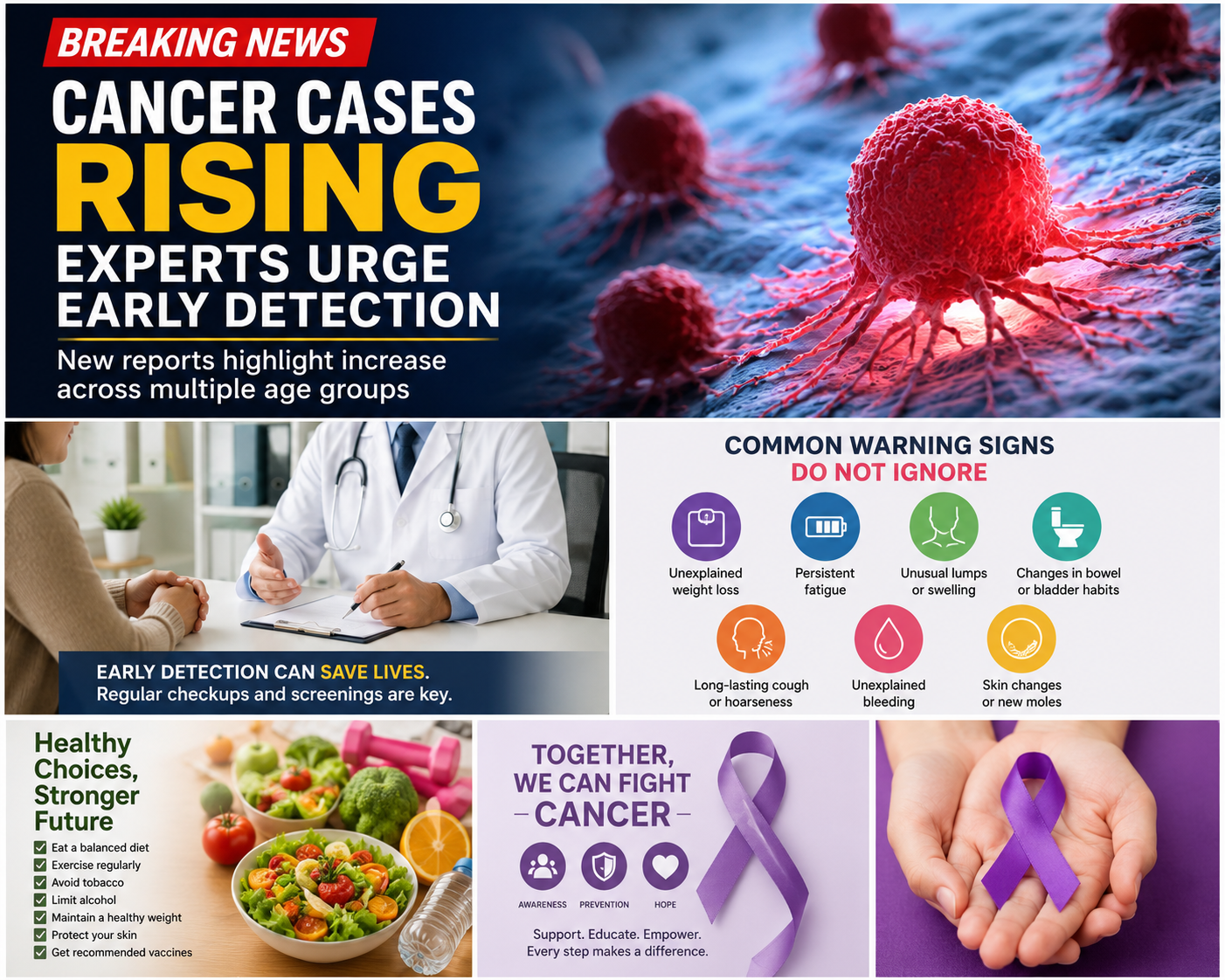
A growing number of health experts are raising concerns as new reports indicate cancer cases are increasing across several age groups, highlighting the urgent need for early screening and greater public awareness.
Medical professionals say the trend is not limited to older adults. Increasingly, younger individuals are also being diagnosed with various forms of cancer, sparking fresh discussions about lifestyle factors, environmental exposure, genetics, and access to preventive healthcare.
Why Experts Are Concerned
According to healthcare specialists, delayed diagnosis remains one of the biggest challenges in the fight against cancer. Many patients continue to overlook early warning signs, resulting in treatment beginning at more advanced stages of the disease.
Doctors emphasize that cancers detected in their early stages often have significantly better treatment outcomes. Routine screenings, regular medical checkups, and awareness of family health history can play a critical role in improving survival rates.
“Early detection can make a life-changing difference,” health professionals continue to stress as awareness campaigns gain momentum across hospitals and public health organizations.
Common Warning Signs People Should Not Ignore
While symptoms vary depending on the type of cancer, experts recommend seeking medical advice if any of the following persist:
- Unexplained weight loss
- Persistent fatigue
- Unusual lumps or swelling
- Changes in bowel or bladder habits
- Long-lasting cough or hoarseness
- Unexplained bleeding
- Skin changes or new moles
Healthcare providers note that these symptoms do not always indicate cancer, but they should never be ignored when they continue for an extended period.
Lifestyle Choices May Influence Risk
Researchers continue to study factors linked to cancer risk. Health experts commonly recommend:
- Avoiding tobacco products
- Limiting alcohol consumption
- Maintaining a healthy body weight
- Exercising regularly
- Eating a balanced diet rich in fruits and vegetables
- Protecting skin from excessive sun exposure
- Following recommended vaccination schedules
These measures cannot guarantee prevention, but they may help reduce the likelihood of developing certain types of cancer.
Growing Focus on Younger Adults
One of the most concerning developments is the increasing number of cancer diagnoses among younger adults. While researchers are still investigating the causes, specialists believe multiple factors could be contributing to the trend.
The rise has led healthcare organizations to encourage younger populations not to dismiss unusual symptoms simply because of age. Many doctors now advocate for greater awareness and proactive healthcare habits among adults under 50.
What Families Can Do Right Now
Experts recommend scheduling routine health checkups, discussing family medical history with healthcare providers, and staying informed about recommended screenings.
Public health officials stress that awareness remains one of the most powerful tools available. Recognizing symptoms early and seeking timely medical attention can significantly improve outcomes for many patients.
As cancer rates continue to draw attention worldwide, healthcare leaders say education, prevention, and early diagnosis will remain at the center of efforts to reduce the disease’s impact on communities.
Key Takeaway
Cancer remains one of the world’s leading health challenges, but experts say early detection, routine screening, and healthy lifestyle choices can make a substantial difference. With awareness growing and medical advances continuing, healthcare professionals hope more people will take proactive steps to protect their long-term health.
About the Author