India’s larger religious and cultural festivals have made a radical shift away from religious and
toward spectacles of massive, organizational engagement that routinely achieve (and
challenge) Guinness World Records. Although Indian mega-festivals still represent distinctive
spiritual devotion, cultural revival, and national pride to showcase India’s legacy, these religious
festivals also put India on the global stage as a place for highly organized events.
Mega-festivals have evolved to represent the public reconciliation of ancient cultural practices
with 21st-century mass action and technical ambitions.

Ayodhya Deepotsav: The Spectacle of Light and Technology
The Ayodhya Deepotsav has become the premier annual event to attempt Guinness World
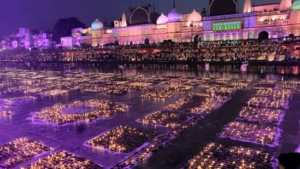
Records, focused on mass illumination and devotion. In 2025, the festival achieved a
tremendous double record. The first record was for the largest display of oil lamps, and it was
verified that 26.17 lakh (2,617,215) diyas were lit at the same time on the ghats of the Saryu
River, creating a mystical sea of gold in this holy city, all the while properly measured. This
impressive, exact, professionally-monitored illumination involved extensive coordination from
over 33,000 volunteers made up of students from the surrounding universities and colleges,
demonstrating extraordinary organizational capacity. The other record was for the most people
turning on diyas during the Saryu Aarti. Over 2,100 scholars and devotees participated in this
coordinated event. But beyond numbers on a page, the event uses modern technology,
including over 1,100 drones to create a three-dimensional presentation of some of the
mythological images shown with Lord Ram with a bow and arrow, Ram Setu, and the final page
of the temple’s top dome, Ram Mandir, etc. Ultimately, the event seamlessly juxtaposes ancient
belief with modern innovation as a cultural tourism project and spiritual identity project.

Maha Kumbh Mela: The Gathering of Humanity and Civic Scale
The Maha Kumbh Mela, held in Prayagraj in 2025, is the world’s largest peaceful assembly of
humanity, affirming its status as a spiritual phenomenon. The 45-day festival had a footfall of an
estimated 66 crore people, creating a vast, temporary, totally self-sustaining city that covered
thousands of acres. Even the record number of devotees seeking spiritual redemption at the
Triveni Sangam is sufficient, but the government used the Mela to create multiple Guinness
World Records that focused on civic organization and sustainability for the largest sanitation
drive in history employing tens of thousands of workers; the largest community service volunteer
participation in history; and the most simultaneous designed activities by a public at a single
public location. The successful Maha Kumbh Mela showed an ingenuity of organization through
the significant use of AI-based crowd management systems, over 2,750 CCTV and drone
cameras, along with largely digital tracking, monitoring, and safety of millions of pilgrims closely,
a project that quickly crossed from spiritual pilgrimage into a multi-layered success of civic
management and organization. The vast economic impact, estimated to generate several play
crore rupees to the regional economy, is more staggering beyond size.
Regional Festivals: Tributes to Culture and Innovation
This trend of record-breaking spectacle has spread rapidly, empowering major regional festivals
to celebrate local culture on a grander stage:
Bathukamma Festival: Feminine Unity and Flora
In Telangana, the Bathukamma Festival, a colorful floral celebration of Mother Goddess Gauri,
achieved two remarkable Guinness World Records. The first record was for the largest
‘Bathukamma’ floral arrangement ever created, which involved large amounts of seasonal,
medicinal varieties of flowers along with large-scale engineering. The second record was for the
most female dancers performing the traditional circular dance, which demonstrated the cultural
spirit, devotion, and collective power of the feminine essence of the festival.
Mysuru Dasara: Royal Heritage Meets Drone Tech
The Mysuru Dasara celebrations in Karnataka, India embrace modernity while also
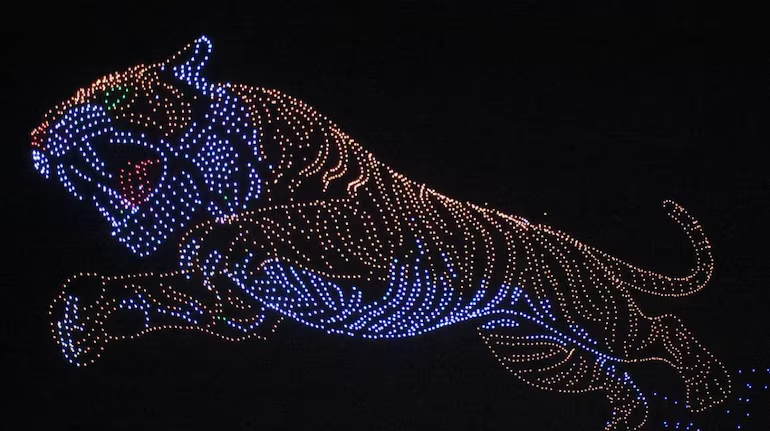
incorporating its royal heritage and tradition. In 2025, the celebrations earned a world record for
the largest aerial display of a mammal, made of multirotors/drones, in a finale that in creatively
amalgamates technology with the kingdom’s royal heritage built over centuries. This display
takes place in view of the illuminated Mysore Palace in order to emphasize its dual purpose of
maintaining a cultural legacy and using modern tools to facilitate an eye-popping spectacle and
to promote the festival around the world.
International Day of Yoga: Global Health Mobilization
The annual International Day of Yoga (IDY) is not a religious festival; instead, it is a large-scale
cultural mobilization program, which takes place this year both nationally and internationally with
unprecedented levels of participation. Every year, an effort to organize the largest simultaneous
yoga demonstration takes place, the basis of which is the Common Yoga Protocol (CYP). The
main national event, presided over by the Prime Minister, has hundreds of thousands of citizens
practicing yoga together at the same time in multiple locations, all in a unified display of a global
theme of health and spiritual discipline, on a massive, coordinated, and documented scale.
These myriad events signal a new chapter in Indian festivals, as cultural preservation takes its
place amongst mass public engagement and event technology buildout to internationally assert
the nation’s cultural identity and organizational branding-even the event name is promoted
through social media and the official government pages across the world.
About the Author