The recent premiere of the film The Taj Story, featuring veteran actor Paresh Rawal, sparked a
significant online controversy and extensive political drama. Marketed as a “historical legal
thriller,” the film emphasizes the pervasive, controversial narrative that the Taj Mahal was, in
fact, a Hindu temple (Tejo Mahalaya), a premise that almost all mainstream historians reject as
pseudo-history. The subject of the film has positioned it as an arena for the ongoing cultural and
political struggle over India’s interpretations of its past.
The Plot of Provocation and the Sealed Rooms
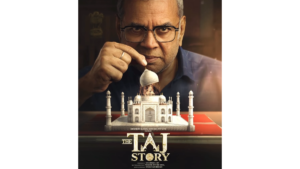
The story follows the character of Vishnu Das, portrayed by Paresh Rawal, a tour guide from
Agra or Uttar Pradesh, who becomes preoccupied with finding out the “true” history of the Taj
Mahal. What starts as an interpretation of a guide’s curiosity effectively plays out in a courtroom
as Das brings a public interest litigation (PIL) to compel the Archaeological Survey of India (ASI)
to open the 22 sealed rooms underneath the monument for “DNA testing” and excavation. The
drama portrays Das’ inquiry as a patriotic truth-finding mission, where the protagonist insists that
the mainstream history that attributes the Taj Mahal to the Mughal Emperor Shah Jahan is a
disguise to mediate the monument’s Hindu legacy. The exuberance of the courtroom
sequences, replete with dialogue and historical references, is clear that it is meant to stimulate
discussion about the phenomena associated with a particular brand of conspiracy-oriented truth
that emerges in large quantities over various social media.
Social Media Outrage and The Propaganda Label
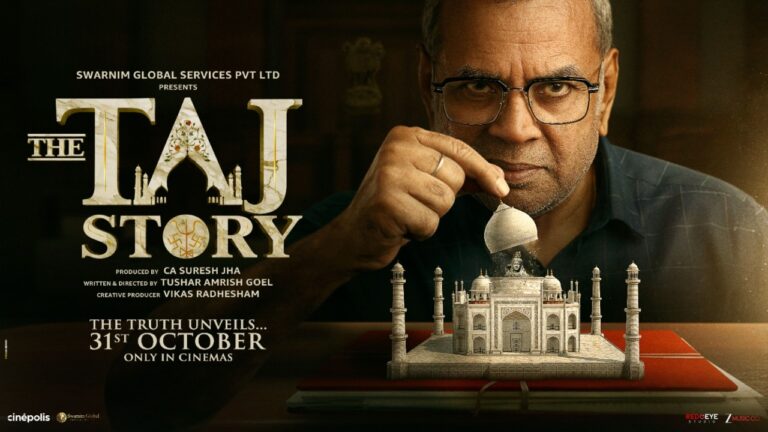
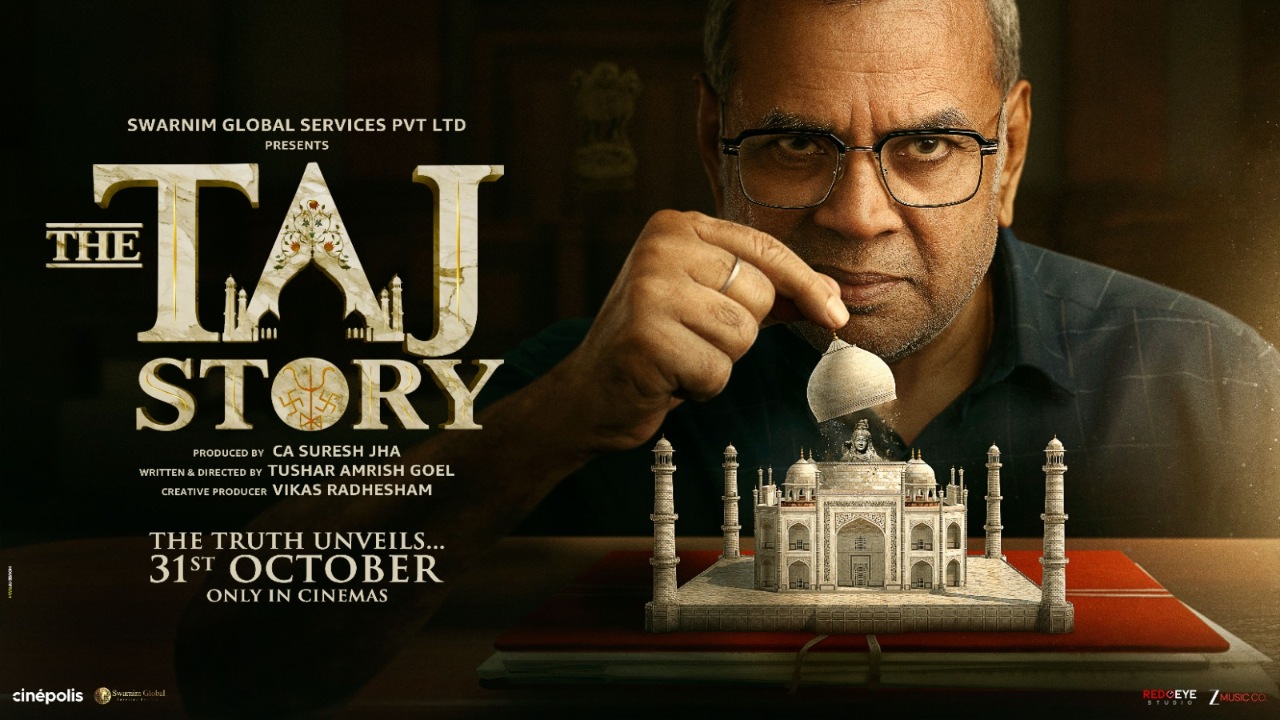
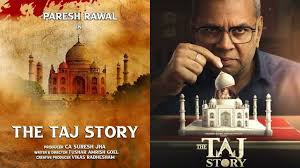
The marketing strategy for The Taj Story was incendiary enough to guarantee there was a
debate almost before the film arrived in cinemas. In particular, a motion poster that showed the
statue of Lord Shiva emerging from the dome of the Taj Mahal raised immediate and
widespread accusations of being “Hindutva propaganda” and inciting communal conflict.
Although the filmmakers later qualified that the film is “based on historical facts” and does not
make any religious claims, detractors of the film have stated that the premise intentionally aligns
with a ‘political movement’ to create a revisionist history. The accusations, nonetheless, led to
multiple Public Interest Litigations (PILs) filed in the Delhi High Court to stay the film’s release,
on the basis it presented false facts and was a threat to communal harmony, although the court
did not acquiesce with an urgent stay of the release.
Critical Division and Artistic Failure
The film received a very divided review cycle: the critics largely condemned the execution while
parts of the audience praised the ambitious take. One film critic described the film as a “loud,
confusing, … claiming much but proving little effort. All reviews condemned that the film was
“overstuffed” with history lessons and tirades about the contemporary state of politics, debating
current headlines, losing its authentic courtroom drama in a recitation of the final campaign
speech. While the only prized note for some reviews was a powerful, serious, and even tender
performance by Paresh Rawal, it was stated that the film could not escape clunky writing or a
lack of narrative focus, and punishment of shallow character development. Conversely, some of
the user reviews on the booking site provided high ratings for the film and even suggested that it
was an “eye-opener” and an “inspiring” film, lauding the film in particular for daring to challenge
the “leftist narrative” of Indian history. In hindsight, the film may be less a quality of
entertainment and more a fulfillment for a part of the viewership and an ideological proposition.
About the Author