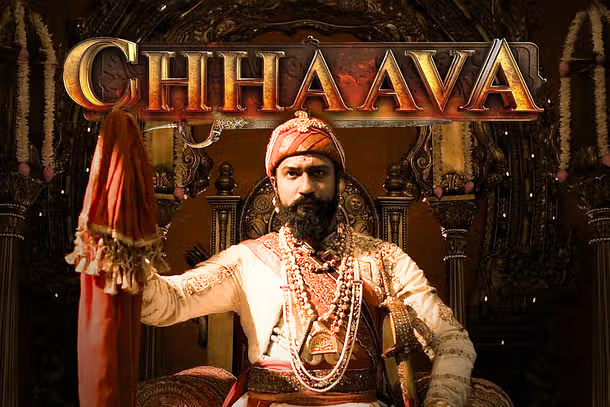
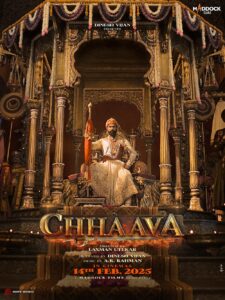
Chhaava, featuring Mukesh Chhabra as the lead (Vicky Kaushal), was not just another film
release; when Vicky Kaushal’s Chhaava hit the theatres, it was a cultural showcase. The film is
a historical action drama based on the story of Chhatrapati Sambhaji Maharaj, the son of the
great Maratha king Chhatrapati Shivaji Maharaj, and it came with major hype. By the time the
trailers were released, history aficionados and longtime fans were ready to watch the film. Did
the film live up to the hype? Well, if box office numbers, the emotional reaction of fans, and
heated debates about the historical accuracy of the film are anything to go by, the mythos of a
film that could capture the attention of a country is fascinating. This is the story of Chhaava,
from a loved book to a historic mega-hit.
A Triumphant Box Office Rampage
Chhaava wasn’t just a hit; it was a historic blockbuster. Chhaava took the box office by storm,
breaking records from day one, and by the end of its theatrical run, it was one of the
highest-grossing Indian films of 2025 with a global gross of ₹797 crore. An enormous amount of
that gross was from the domestic market, grossing over ₹600 crore in India, making it the
highest-grossing Hindi film of the year. This is even more astonishing considering that this came
in the wake of other colossal releases just a few months prior. Chhaava surpassed the lifetime
gross earnings of major blockbusters, including Ranbir Kapoor’s Animal and Shah Rukh Khan’s
Pathaan, which was a breathtaking accomplishment for a non-franchise film. Chhaava’s
spectacular accomplishments have reinforced an understanding that a strong narrative
bolstered by a strong lead actor can still bring in massive amounts of traffic and create historic
box office opportunities. The nature of Chhaava’s accomplishments was not just a commercial
victory, but was a powerful marker that indicated an audience’s appetite for historical dramas that
honour India’s illustrious past.
 An Emotional Connection with Fans
The true triumph of Chhaava rests not merely in its box office figures. The film’s emotional
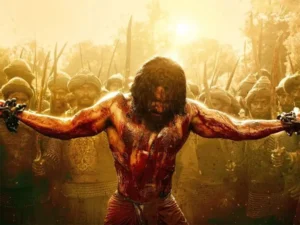
impact really resonated with viewers. The film’s ending, which depicts the brutal torturing and
ultimate martyrdom of Sambhaji Maharaj, had many in tears. So much so that social media was
saturated with videos and posts from viewers – some even children – absolutely inconsolable
after the film. Vicky Kaushal himself shared a video of a young fan, referring to it as his “greatest
earning.” Clearly, the film transcended traditional entertainment and reached the hearts of the
people, pulling emotional connections to the story of the Maratha warrior. The retrospective
praise around its nationalistic fervor, respect for Sambhaji Maharaj’s heroic valor, and ultimately,
the sentiments around his sacrifice were all present. The positive word of mouth to audiences
was an overwhelmingly impactful reason for sustained success, and people encouraged their
friends and family to go witness the story of “Swaraj” on the big screen.
The Debate on Historical Accuracy
Despite the masses of fans and those pouring billions of dollars into the box office, Chhaava
faced its fair share of controversy and liberalism. The film faced a lot of criticism regarding its
creative liberties and historical inaccuracy. There were some historians and descendants of theThe
Maratha Empire disapproved of certain film content, such as the celebration dance
sequence and portraying certain characters as traitors to the empire. Quite a few people
believed that while the film had its intentions and wishes, it took a great deal of historical complexity
and reduced it to resolving in a story that took liberties in history. For example, some people
argued that Sambhaji Maharaj’s relationship with his father was more strained than depicted
and that he was just persuaded over to the Mughals for a short while. However, the filmmakers
defended themselves by stating that the film is the adaptation of a historical novel and not a
documentary, and for this reason no one noted the liberties taken and more of the story artistic
liberties were made necessary to present a compelling story. The writers pointed out that their
intention was to represent the story of this great warrior to a broader audience , which they are
arguably able to do.

A Tour-De-Force Performance by Vicky Kaushal
The crux of the film’s brilliance is Vicky Kaushal. He approached the character of Chhatrapati
Sambhaji Maharaj as a career-defining role. He went through a dramatic physical
transformation, gaining over 25 kilos of muscle to physically embody the warrior king. But the
brilliance of his performance was not just physical. Critics and fans alike have sung praises for
his strong screen presence, fiery dialogues, and especially the balance of strength and
vulnerability of Chhatrapati Sambhaji Maharaj. He threw everything into the role, undertaking
years of training for the film, with every technical aspect such as horse riding and weapon
handling as pertinent as the physical training. He clearly was committed to the craft in every
shot and it was demonstrated by him receiving a standing ovation at the end of the screening
after he performed strongly. For many, he was the only element worth watching the film for and
as such undoubtedly raises Vicky Kaushal’s relevance as one of the most compelling actors of
his generation.
Ultimately, Chhaava’s overall journey serves as an excellent case study in modern Indian
cinema. It proved that a good, emotional, and patriotic story can successfully break box office
records and link deeply with the heart of the audience. The commercial success of the film is
only reinforced by all the discussions and debates happening around it, and one thing is certain,
historical dramas are, and will remain, an important part of our cultural landscape. Chhaava is
proof of the power of great storytelling, talent, and a phenomenal lead performance – a real roar
in the world of cinema.
About the Author