
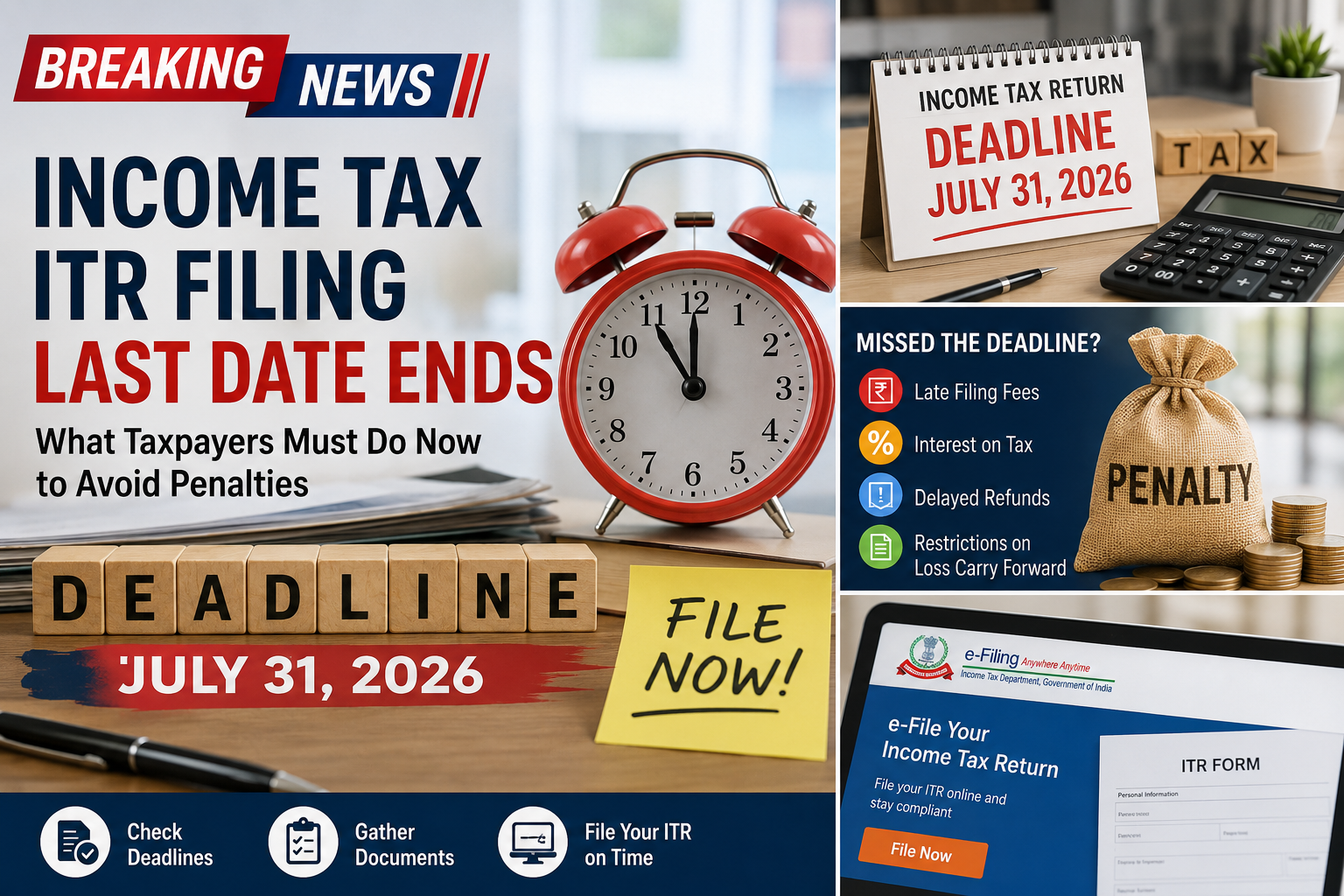
Thousands of taxpayers across India are waking up to an important tax update today. The Income Tax Return (ITR) filing last date for most salaried individuals and non-audit taxpayers officially ended on July 31, 2026, and anyone who missed the deadline should act quickly to minimize penalties and avoid further compliance issues.
With the deadline now behind us, many taxpayers are asking the same question: Can I still file my Income Tax Return? The answer is yes—but there are important rules, deadlines, and possible financial consequences you need to know.
No Official Extension Announced
Despite widespread expectations and speculation over a possible extension of the July 31 deadline, the government did not announce any official extension before the cut-off. Tax professionals had anticipated that additional time might be granted due to the large number of pending returns, but the deadline remained unchanged.
Who Was Required to File by July 31?
The July 31 due date applied primarily to:
- Salaried employees
- Pensioners
- Individual taxpayers without tax audit requirements
- Most taxpayers filing ITR-1 or ITR-2
Certain business and professional taxpayers who are not subject to a tax audit have a later filing deadline of August 31, 2026, under the updated filing schedule.
Missed the Income Tax ITR Filing Last Date? Here’s What Happens
Missing the original due date does not permanently prevent you from filing your return, but it can lead to several consequences, including:
- Late filing fees under Section 234F
- Interest on unpaid tax liabilities
- Delayed tax refunds
- Restrictions on carrying forward certain losses
Tax experts recommend filing the return as soon as possible instead of delaying further.
Can You Still File a Belated ITR?
Yes. Taxpayers who missed the July 31 deadline can still submit a belated return.
According to the Income Tax Department, the last date for filing a belated return for AY 2026–27 is December 31, 2026, subject to applicable legal provisions and assessment status. Filing earlier can help reduce complications and speed up refund processing.
Documents You Should Keep Ready
Before filing your return, ensure you have:
- Form 16
- PAN and Aadhaar details
- Form 26AS
- Annual Information Statement (AIS)
- Bank account information
- Investment and deduction proofs
- Interest income details
Having complete information reduces the risk of errors and future notices.
Why Filing Early Still Matters
Tax professionals consistently advise taxpayers not to wait until the final day. Early filing helps:
- Receive refunds sooner
- Avoid portal congestion
- Reduce filing mistakes
- Allow time to revise returns if necessary
- Prevent unnecessary penalties
Even if you missed the original deadline, filing promptly remains the best option.
What Taxpayers Should Do Today
If you have not yet filed your Income Tax Return:
- Verify which ITR form applies to you.
- Gather all supporting documents.
- Check AIS and Form 26AS before submitting.
- File your belated return without unnecessary delay.
Waiting longer could increase compliance issues and postpone any eligible refund.
Final Word
The Income Tax ITR filing last date may have passed for millions of individual taxpayers, but the opportunity to file a belated return is still available. Acting quickly can help reduce penalties, avoid unnecessary complications, and keep your tax records compliant.
Taxpayers are encouraged to verify their eligibility, review their financial information carefully, and complete the filing process as early as possible rather than waiting until the final belated deadline.
About the Author