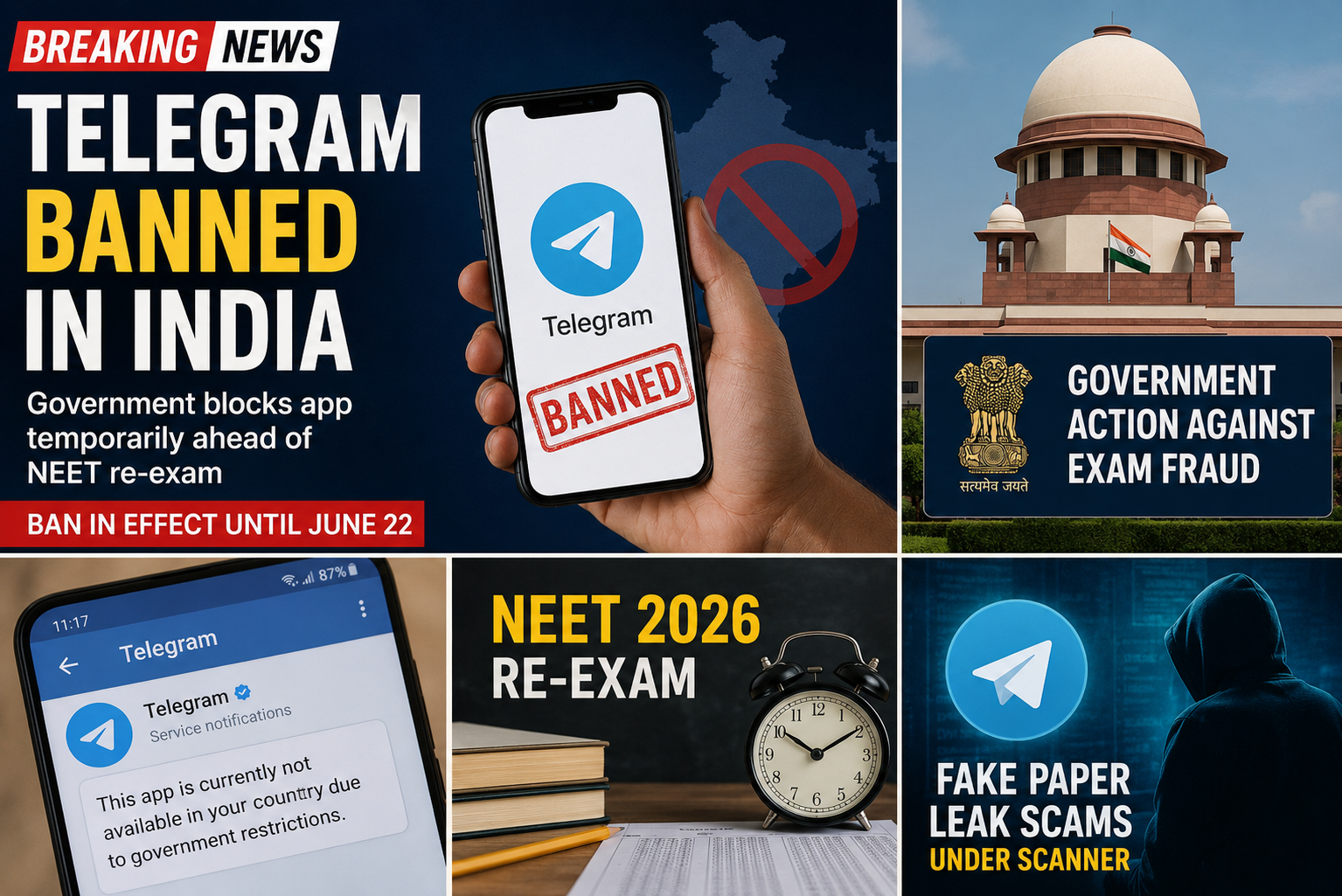
In a major development that has sparked widespread discussion across the country, the Indian government has temporarily blocked Telegram, one of the world’s most popular messaging platforms, citing concerns over exam-related fraud linked to the upcoming NEET 2026 re-examination.
The Indian government announced the Telegram ban just days before the NEET re-test scheduled for June 21, making it one of the most significant actions against a major messaging app in the country’s history.
Why Did the Indian Government Block Telegram?
According to government officials, several Telegram channels were allegedly being used to circulate fake question papers, spread misinformation, and facilitate cheating networks connected to the NEET 2026 re-examination.
Authorities believe organized groups were exploiting the platform to target students and parents by promising access to leaked exam papers in exchange for money. The government stated that repeated efforts to curb such activities were not sufficient, leading to the decision to temporarily restrict access to the app.
The restriction is currently expected to remain in place until June 22, immediately after the re-examination process concludes.
Impact on Millions of Telegram Users
The temporary block has affected millions of users who rely on Telegram for daily communication, business operations, educational groups, and content distribution.
Several users reported difficulties accessing channels, groups, and messaging services shortly after the government issued the order. The disruption has also impacted educators, startups, traders, and digital creators who use Telegram as a primary communication tool.
While authorities maintain the action is necessary to protect the integrity of the examination process, critics argue that a platform-wide restriction may affect legitimate users who have no connection to the alleged fraud.
Government’s Stand on the Decision
Officials emphasized that the restriction serves as a precautionary measure to prevent people from spreading fake information and engaging in illegal exam-related activities during this sensitive period.
The National Testing Agency (NTA) has reportedly welcomed the move, stating that maintaining the fairness and credibility of the examination is a top priority.
The decision follows weeks of controversy surrounding allegations of paper leaks and irregularities linked to NEET 2026, which have already triggered public outrage and nationwide debate.
Could Telegram Return Soon?
As of now, the restriction is temporary. Government sources say authorities could restore Telegram access after June 22 if they determine that exam-related misuse no longer poses an immediate threat.
However, the situation remains fluid, and any future action will likely depend on ongoing investigations and Telegram’s cooperation with Indian authorities.
What Telegram Users Should Do
Officials advise users to rely on official government announcements and verified educational portals for examination-related updates. Students preparing for the NEET re-exam should avoid unofficial channels claiming to provide leaked papers or guaranteed exam content.
Cybersecurity experts also recommend exercising caution when joining unknown groups or responding to messages promising access to confidential examination material.
The Bigger Picture
The temporary Telegram block has once again reignited the debate around digital freedom, platform accountability, and online misinformation in India. While supporters of the move see it as a necessary step to protect students, critics question whether broad restrictions on communication platforms are the most effective solution.
With millions watching closely, the coming days will determine whether the restriction remains a short-term measure or becomes part of a larger conversation about regulating digital platforms in India.
For now, Telegram users across the country are waiting for clarity as the government continues its crackdown on exam fraud and misinformation.
About the Author