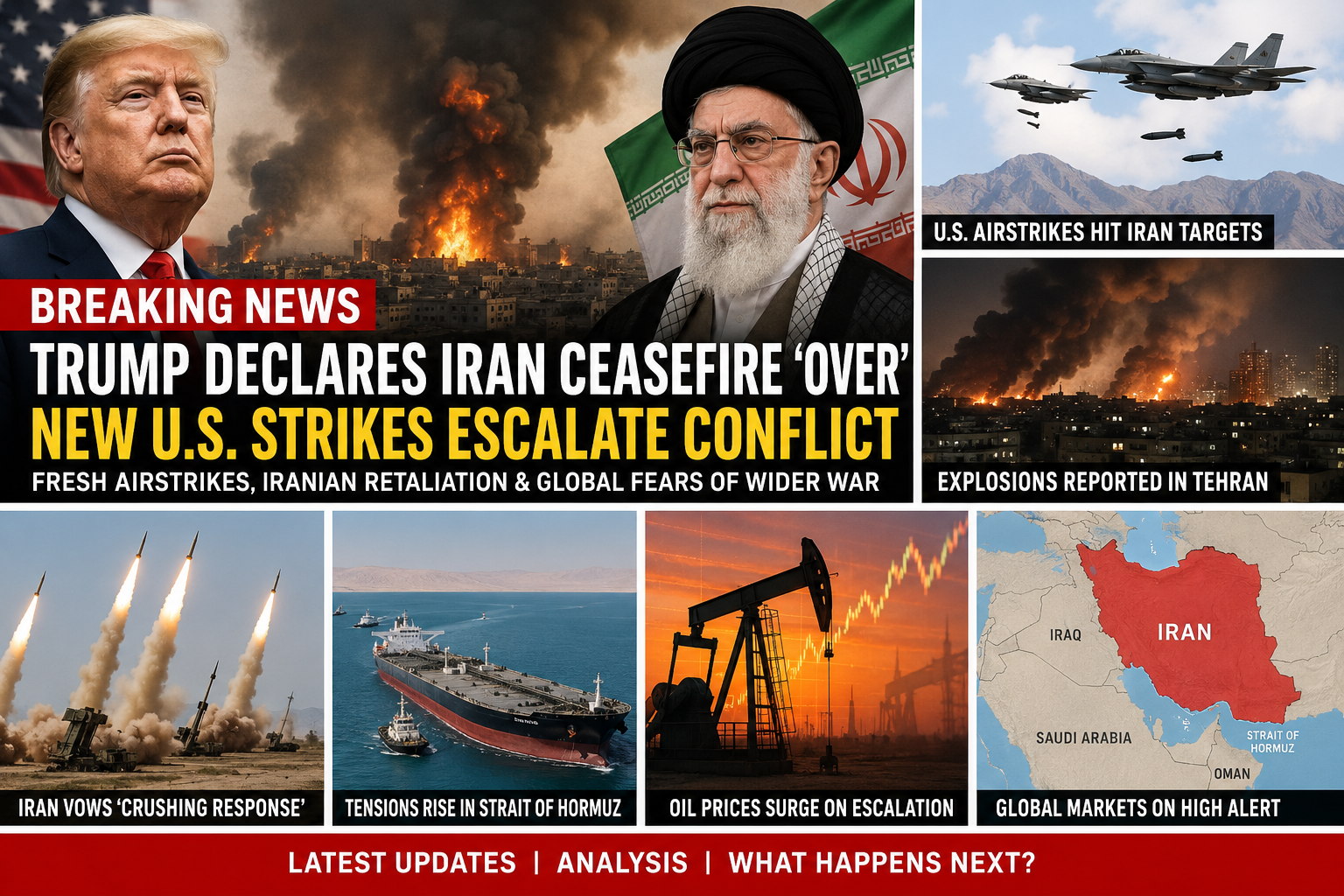
The fragile pause in the Iran War Trump conflict has dramatically collapsed after U.S. President Donald Trump announced that the interim ceasefire agreement with Iran is “over,” signaling a dangerous new phase in one of the world’s most volatile geopolitical crises. Fresh American airstrikes and Iranian retaliation have reignited fears of a wider regional conflict, sending oil prices higher and rattling global financial markets.
The latest escalation comes just weeks after diplomatic efforts appeared to offer hope for reducing tensions between Washington and Tehran. Instead, both nations are now exchanging military actions, raising concerns among world leaders about the possibility of a prolonged confrontation.
Trump Says Ceasefire Is Finished
Speaking ahead of a NATO summit, President Donald Trump confirmed that the temporary understanding between the United States and Iran had effectively ended.
Trump accused Iran’s leadership of failing to honor commitments made during indirect negotiations and warned that additional American military operations could follow if Tehran continues its military activities. According to U.S. officials, recent attacks on commercial shipping in the Strait of Hormuz were a major factor behind Washington’s decision to resume military action.
His remarks represent one of the strongest statements since the conflict intensified earlier this year and indicate that diplomacy has, at least for now, been replaced by military pressure.
Fresh U.S. Airstrikes Target Iranian Military Positions
Following the collapse of the ceasefire, U.S. forces launched strikes on dozens of Iranian military facilities near the Strait of Hormuz.
American officials said the operation targeted missile systems, drone infrastructure, air-defense positions, and military logistics centers believed to be linked to recent attacks on commercial vessels.
Iran quickly condemned the strikes, calling them an act of aggression and promising a “crushing response.” Reports indicate that Tehran has also expanded military operations against U.S. interests in the Gulf region.
Strait of Hormuz Again Becomes Global Flashpoint
The Strait of Hormuz remains one of the world’s most strategically important shipping routes, carrying a significant share of global oil exports.
As tensions intensified, Iran War Trump that maritime traffic through the waterway could face additional risks, while international shipping companies began reassessing operations in the region. The renewed uncertainty has once again placed global energy markets under pressure.
Oil Prices Surge as Investors React
Financial markets responded immediately to the latest developments.
Brent crude and West Texas Intermediate oil prices climbed sharply as traders priced in the growing risk of supply disruptions from the Middle East. At the same time, major stock indexes fell as investors shifted toward safer assets amid fears that the conflict could expand further.
Economists warn that prolonged instability around the Strait of Hormuz could increase transportation costs, fuel inflation, and affect energy prices worldwide.
International Community Calls for Restraint
Several governments and international organizations have urged both Washington and Tehran to avoid further escalation.
Diplomatic efforts continue behind the scenes, but analysts say the latest military exchanges have significantly reduced the likelihood of immediate negotiations. NATO leaders and regional partners have expressed concern that continued retaliation could destabilize the broader Middle East.
What Happens Next?
Military experts believe several scenarios remain possible over the coming days:
- Additional U.S. military strikes if Iran launches further attacks.
- Expanded Iranian retaliation targeting regional military assets or shipping lanes.
- Increased sanctions and economic pressure on Tehran.
- Renewed diplomatic efforts if international mediators succeed in bringing both sides back to negotiations.
Much will depend on developments around the Strait of Hormuz and whether either side chooses further escalation or renewed diplomacy.
Why This Story Matters
The latest breakdown in U.S.-Iran relations extends well beyond the Middle East. Any prolonged disruption to energy supplies can affect fuel prices, financial markets, international trade, and global economic stability.
With both nations adopting increasingly hardline positions, governments, investors, and security analysts around the world are closely monitoring every new development.
Conclusion
Donald Trump’s declaration that the Iran War Trump ceasefire is “over” marks a major turning point in the ongoing conflict. Fresh U.S. airstrikes, Iranian retaliation, and rising tensions around the Strait of Hormuz have dramatically increased fears of a wider regional war. While diplomatic channels remain open in theory, the immediate outlook points toward continued uncertainty, making this one of the most closely watched international stories of the moment.
About the Author