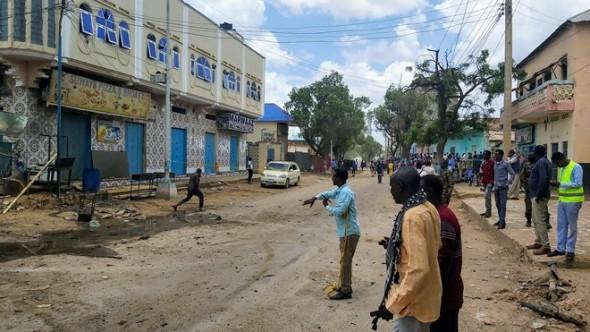
Somalia breaking news was rocked by intense fighting on Monday as federal government forces clashed with armed groups loyal to former South West State President Abdiaziz Hassan Mohamed Laftagareen, in one of the most serious outbreaks of violence the city has seen in months.
Somali federal troops later pushed the opposition fighters out of Baidoa, according to residents who spoke to Reuters. The fighting lasted for hours and sent fear through a city already under immense pressure from conflict, displacement and a worsening humanitarian crisis.
Heavy Fighting Erupts in Central Baidoa
The clashes began early Monday, with Somalia’s Defence Ministry saying federal troops came under attack before dawn from fighters using vehicles loaded with explosives.
Government forces said they managed to repel the assault and drive the attackers from the city. The ministry claimed that about 30 opposition fighters were killed, although independent casualty figures remained unclear.
Residents described a chaotic scene in parts of central Baidoa, with gunfire and explosions heard as the confrontation intensified.
One local elder told Reuters he had seen 10 bodies, including civilians and members of the rival forces. Other residents reported civilian casualties and injuries caused by stray bullets.
The conflicting accounts underscore how difficult it remains to establish the full toll while fighting and political tensions continue.
Political Crisis Behind the Baidoa Fighting
Monday’s violence is not an isolated security incident. It comes after months of escalating tensions between Somalia breaking news federal government in Mogadishu and political leaders in South West State.
The dispute intensified earlier this year when the South West State administration accused the federal government of interfering in regional affairs and announced that it was cutting ties with Mogadishu.
Federal forces subsequently took control of Baidoa in March, while Laftagareen resigned from office. The latest fighting shows that the political dispute remains far from settled.
At the heart of the disagreement are questions over elections, constitutional changes and the balance of authority between Somalia’s federal government and its regional administrations.
Several regional authorities have resisted what they see as growing political influence from Mogadishu, adding another layer of instability to a country already fighting the long-running Al-Shabaab insurgency.
Why Baidoa Matters
Baidoa is one of Somalia’s most important cities and a major centre for humanitarian operations.
The city is home to large numbers of people displaced by fighting, hunger and drought elsewhere in the country. Aid agencies rely on Baidoa as a key base for delivering assistance to vulnerable communities across South West State.
That makes the renewed fighting especially concerning.
Any prolonged disruption to security in Baidoa could make it harder for humanitarian organisations to reach displaced families and children who are already facing severe shortages of food, water and medical care.
Somalia’s wider humanitarian situation has deteriorated sharply in 2026. Médecins Sans Frontières recently warned that nutrition programmes have suffered an enormous funding shortfall while cases of severe malnutrition have increased. In Baidoa displacement sites, the organisation reported that one in four screened children was severely malnourished.
Somalia Faces Multiple Pressures
The latest Baidoa clashes come as Somalia confronts several overlapping challenges.
The federal government continues its campaign against Al-Shabaab, while disagreements with regional administrations are creating a separate political and security challenge.
At the same time, humanitarian agencies are warning of worsening needs as drought, food insecurity, displacement and insufficient funding place additional pressure on communities.
The renewed violence therefore raises concerns beyond Baidoa itself. If political disputes continue to escalate into armed confrontation, Somalia could face further disruptions at a time when government forces and humanitarian organisations are already dealing with significant security and resource constraints.
What Happens Next in Baidoa?
For now, federal forces appear to have regained control of Baidoa after Monday’s fighting.
However, the underlying political dispute remains unresolved.
The immediate priority will be preventing another escalation, protecting civilians and maintaining access for humanitarian organisations. Longer-term stability will depend heavily on whether Somalia’s federal authorities and regional political leaders can find a political solution to their disagreements over elections, constitutional reforms and the distribution of power.
For residents of Baidoa, the hope is that Monday’s fighting will not become the beginning of another prolonged confrontation.
This is a developing story. Further details on casualties, security conditions and political developments in Baidoa may emerge as Somalia breaking news authorities and local sources provide additional information.
About the Author