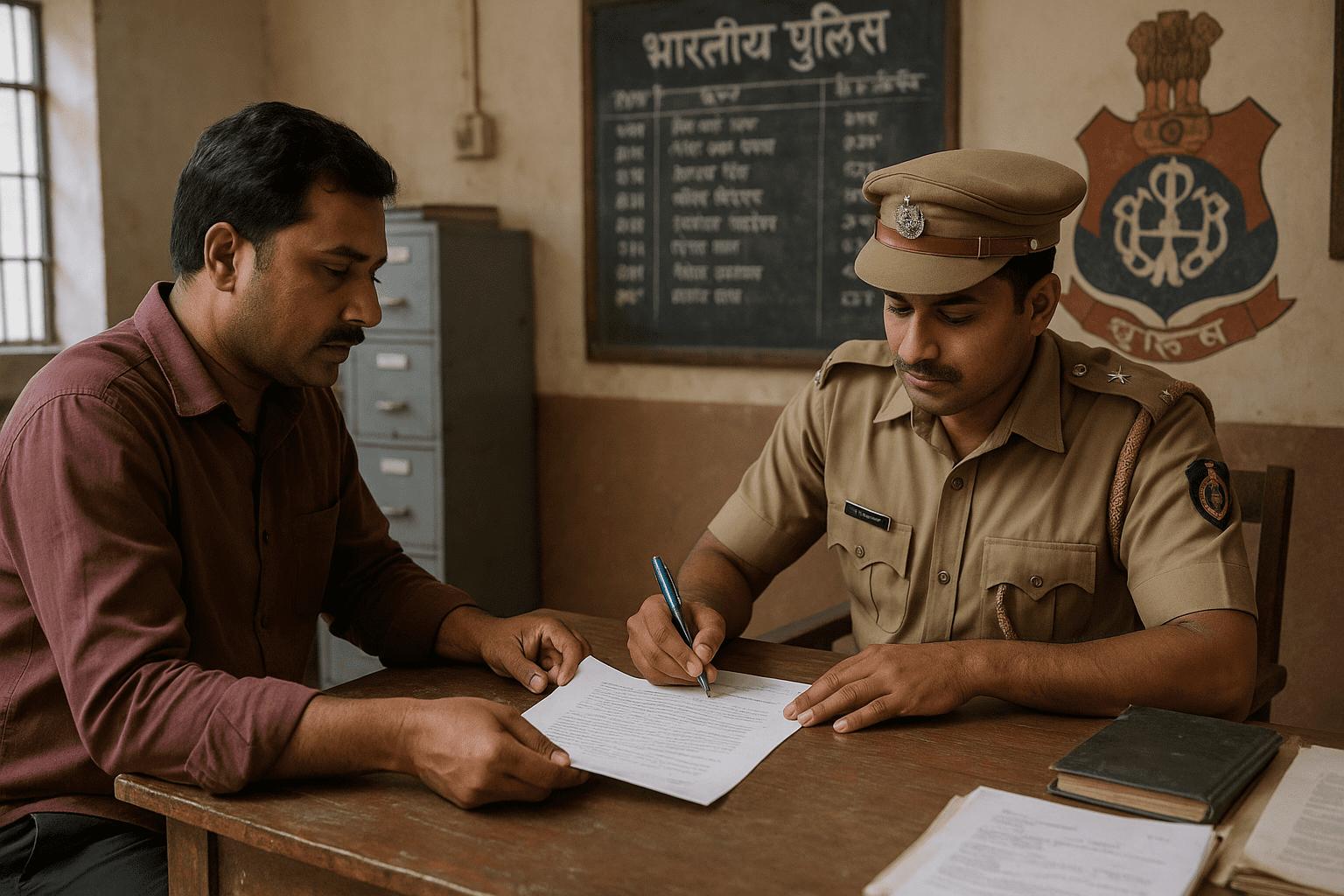
A First Information Report, commonly known as an FIR, is one of the first and most important steps in India’s criminal justice process. When information about a cognizable offence reaches the police, the FIR sets the investigation process in motion.
For many people, however, the process of filing an FIR can still seem confusing. What information is required? Can someone other than the victim file it? What happens if the police refuse to register the complaint? And is a copy of the FIR available to the complainant?
Here is everything you need to know.
What is a First Information Report?
An FIR is the information recorded by the police concerning the alleged commission of a cognizable offence. It provides the police with the initial information needed to begin the criminal investigation.
An FIR does not itself establish that the accused is guilty. It records the information received by the police and provides the starting point for investigation.
The Maharashtra Police also describes an FIR as information given to the police about the commission of a cognizable offence, which is recorded and signed by the informant.
Who can file an FIR?
The victim is not necessarily the only person who can provide information for an FIR. A person who knows about the commission of a cognizable offence can approach the police.
Depending on the circumstances, information may therefore be provided by the victim, a relative, a witness or another person who has knowledge of the alleged offence.
What information should an FIR contain?
A complaint should clearly explain what happened without unnecessary exaggeration or speculation.
Generally, useful details include:
- The complainant or informant’s name and contact details
- Date and approximate time of the incident
- Location of the alleged offence
- A clear description of what happened
- Details of the persons allegedly involved, if known
- Names or details of witnesses, if available
- Information about stolen or damaged property, where relevant
- Any other facts that may help police begin their investigation
The information should be as accurate and specific as possible.
Can an FIR be filed at any police station?
A significant change under India’s newer criminal-law framework is the availability of Zero FIR. The Ministry of Home Affairs says a person can file an FIR at any police station irrespective of territorial jurisdiction, helping avoid delays in reporting an offence.
This is particularly important when the incident occurs away from the victim’s home or when there is uncertainty about which police station has jurisdiction.
What happens after an FIR is registered?
Once an FIR is registered, the police can begin investigating the alleged offence. The investigation may involve visiting the scene, recording statements, collecting evidence, examining relevant documents or digital material and taking other legally permitted steps.
Registration of an FIR should not be confused with a finding of guilt. The investigation and subsequent legal proceedings determine what happened and whether there is sufficient evidence to proceed against an accused person.
Is a copy of the FIR free?
Yes. The informant is entitled to receive a copy of the registered FIR without charge. This is an important document and should be checked carefully to ensure that the information recorded accurately reflects the complaint.
What if police refuse to register an FIR?
If information disclosing a cognizable offence is not recorded, there are legal remedies available.
The police guidance published by the Meghalaya Police explains that an informant can approach a senior police officer, such as the Superintendent of Police, when the officer in charge of the police station refuses to record the information.
Depending on the circumstances and applicable law, a person may also seek appropriate relief from a court.
Can an FIR be filed online?
India’s new criminal-law framework also provides for reporting incidents through electronic communication in certain circumstances. The Ministry of Home Affairs has highlighted electronic reporting as part of the victim-centric provisions introduced under the new criminal laws.
The exact online process, however, can vary depending on the state police system and the nature of the complaint.
FIR is the beginning, not the end
An FIR is an important document because it formally puts the criminal investigation process into motion. But it is only the beginning of that process.
The allegations contained in an FIR still have to be investigated. Evidence must be examined, statements may be recorded and the legal process must determine whether the allegations can be substantiated.
For anyone reporting a crime, the most important step is to provide truthful, clear and relevant information and carefully verify the details before signing the recorded statement.
Bottom line: If you are reporting a cognizable offence, an FIR can be a crucial first step toward getting the matter investigated. With the introduction of mechanisms such as Zero FIR and electronic reporting, the process has also become more accessible in several circumstances.
About the Author