As dengue infections continue to rise across several Indian states during the monsoon season, the Takeda dengue vaccine has once again become a major topic of discussion among health experts, policymakers, and the general public. Japanese pharmaceutical giant Takeda developed the vaccine, and health experts now view it as one of the most promising tools in the global fight against dengue a mosquito-borne disease that affects millions of people every year.
With cities across India witnessing seasonal spikes in dengue cases, questions are growing about whether the vaccine could soon become available to the country’s broader population.
Why the Takeda Dengue Vaccines Is Making Headlines
Dengue remains one of India’s most serious public health concerns, particularly during the rainy season when mosquito breeding increases rapidly. Hospitals in states such as Delhi, Maharashtra, Karnataka, Odisha, West Bengal, and Tamil Nadu often report a sharp rise in patients suffering from high fever, severe body pain, and dengue-related complications.
Against this backdrop, Takeda’s dengue vaccine has emerged as a significant breakthrough after receiving approvals in several countries and recommendations from global health organizations.
Health experts believe vaccination, alongside mosquito control measures, could dramatically reduce severe dengue cases in regions where the disease is widespread.
What Is the Takeda Dengue Vaccine?
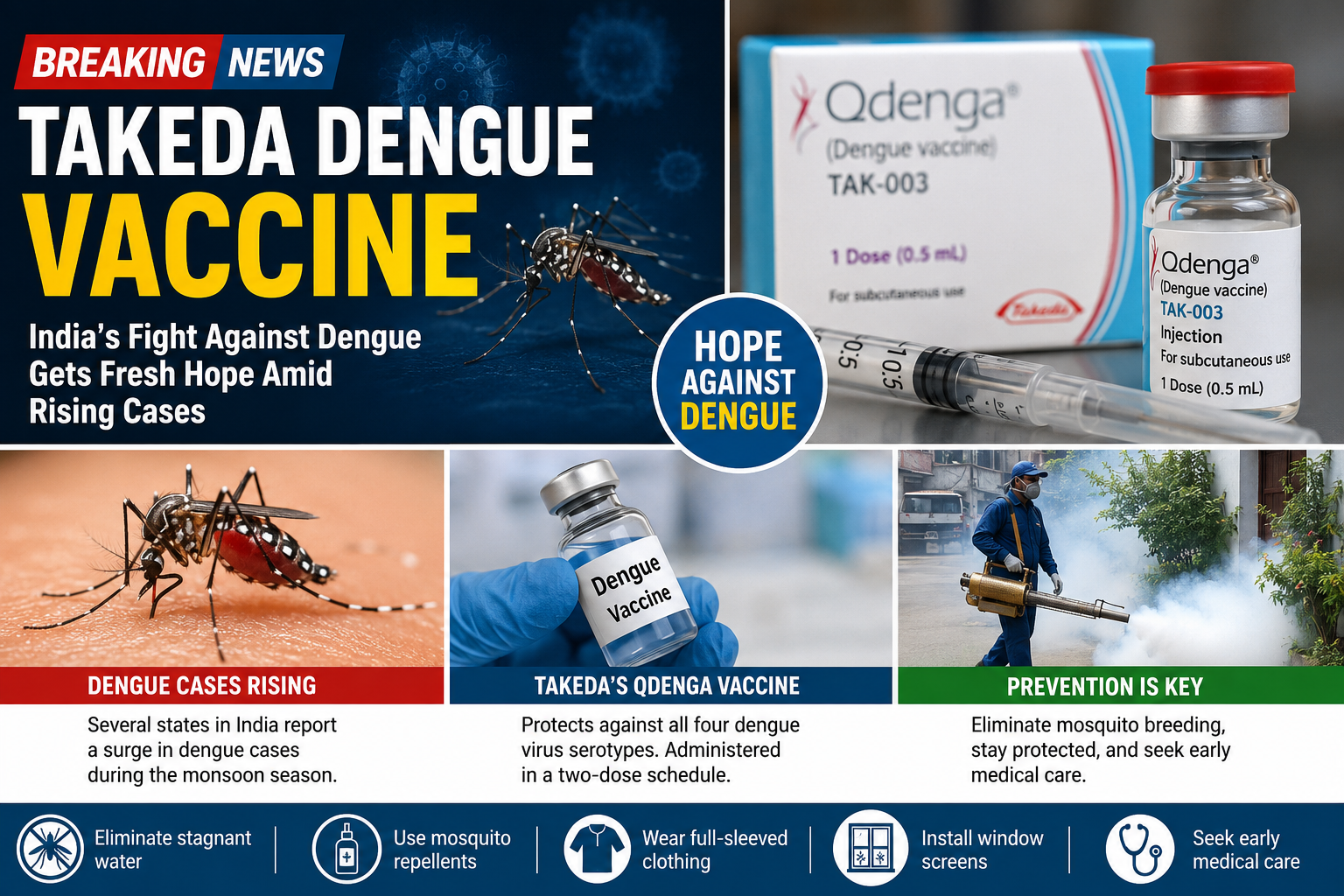
Takeda designed its dengue vaccine, commercially known as QDENGA (TAK-003), to protect against all four dengue virus serotypes.
Unlike earlier dengue vaccines that had limitations regarding prior infection status, QDENGA has shown broad protection in clinical studies and has attracted international attention for its safety profile and effectiveness.
Key highlights include:
- Protection against all four dengue virus strains.
- Designed for people living in dengue-endemic regions.
- Administered in a two-dose schedule.
- Developed after years of global clinical trials involving thousands of participants.
Is the Takeda Dengue Vaccine Available in India?
At present, the Takeda dengue vaccine is not yet part of India’s national immunization programme, and widespread public availability remains limited.
Indian health authorities continue to evaluate global data while monitoring local clinical and regulatory developments.
Medical experts emphasize that vaccination decisions depend on regulatory approvals, disease burden, pricing, and public health priorities.
Why India Needs Better Dengue Protection
India reports thousands of dengue infections every year, with the highest numbers typically recorded between July and November.
Urbanization, water stagnation, climate change, and rapid mosquito breeding have made dengue increasingly difficult to control through traditional preventive measures alone.
Public health experts say vaccines could become an important addition to existing prevention strategies that include:
- Eliminating mosquito breeding sites.
- Using mosquito repellents.
- Wearing full-sleeved clothing.
- Installing window screens.
- Seeking early medical care when symptoms appear.
What Experts Are Saying
Integrated mosquito control, public awareness campaigns, improved sanitation, and timely diagnosis will continue to play a vital role in reducing hospitalizations and deaths.
Global Momentum Behind the Vaccine
Regulatory authorities in multiple countries have approved the Takeda dengue vaccine, and public health officials have included it in vaccination strategies in some dengue-endemic regions.
International health organizations continue to monitor real-world effectiveness as vaccination programs expand.
What This Means for Indian Families
As monsoon-driven dengue outbreaks continue to challenge healthcare systems, the emergence of an effective vaccine offers renewed optimism.
Frequently Asked Questions (FAQs)
What is the Takeda dengue vaccine?
Takeda developed the QDENGA (TAK-003) dengue vaccine to protect against all four dengue virus serotypes.
Is the Takeda dengue vaccine available in India?
How many doses do patients need?
Healthcare providers administer the vaccine in a two-dose schedule.
Can the vaccine completely prevent dengue?
No vaccine provides 100% protection. Mosquito control and personal preventive measures remain essential.
Why is the vaccine important?
It has the potential to reduce severe dengue cases and hospitalizations in regions where dengue is endemic.
About the Author