

Japan used pure blue light instead of green at traffic signals
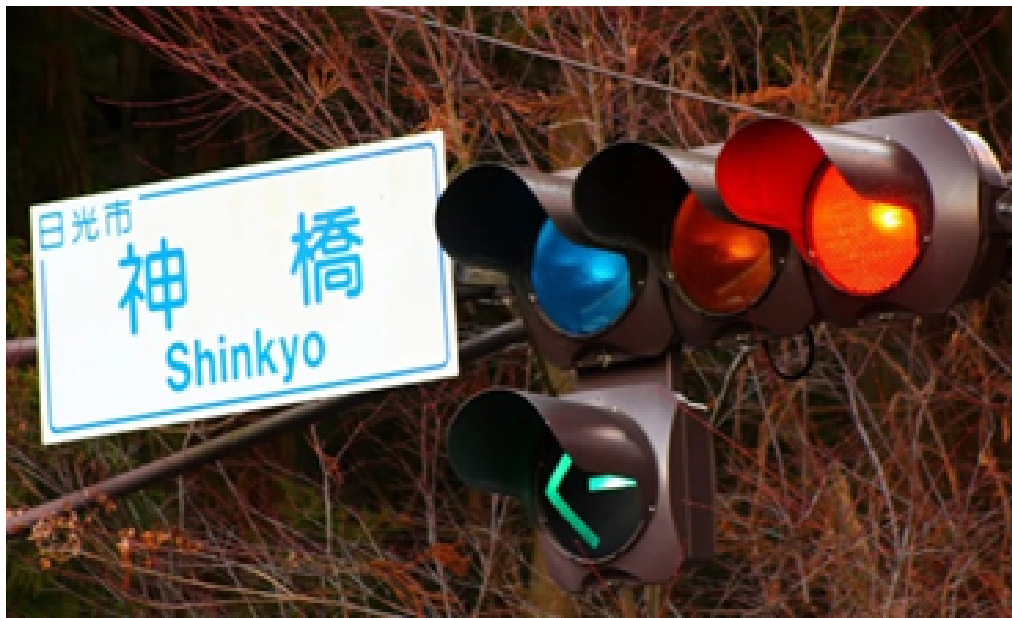
Have you ever seen a blue light on a traffic signal? The answer (japan traffic lights) must be a ‘no’. But some years ago Japan used mythical blue traffic lights in some areas.
Japanese Government set blue light as “go” signals in their street light due to their linguistic obsession. Japanese is the language that used the same word ‘ao’ for both the green and blue colors. But now the modern Japanese language says that ‘ao’ means blue and ‘modori’ refers to green. On the other hand, the official ”Go” color of a traffic light is called ‘ao’ even it is a perfect green.
Till 1968, the Japanese government did not accept the standardized traffic signals. In 1973, they decided that traffic light should be green. From then, they are using the bluest shade of green in the traffic light. But when it comes to (japan traffic lights) the licensing test, the Japanese drivers have to distinguish between red, yellow, and blue in their vision test part.
About the Author






Brat Generator Online makes it easy to create brat-style text visuals instantly.
Our expert team at Restore Old Photos uses state-of-the-art techniques to restore your old pictures to their original quality
Concrete Calculator is a free online tool that helps you quickly estimate concrete volume for slabs, footings, and foundations.
Ai Photo Enhancer enhances images by increasing clarity, sharpness, and details.
HEIC to JPG is a free online tool that allows anyone to quickly and easily convert HEIC images to JPG format.
AI Image Editor is a powerful AI image editor for restoring and enhancing images.
This online square face generator is the best Picrew alternative in English — create adorable square face icons for social media and game development
Brat Generator – Free Online Brat Style Cover Text Generator.
With Restore Old Photos, you can easily repair damaged, faded, or torn photographs and preserve them for future generations
Fascinating how a linguistic quirk led Japan to use a distinctively bluish green in traffic signals — it really shows how cultural and language norms can shape even the most standardised systems. It reminds me that perception and interpretation play a huge role in how we understand the world, from traffic lights to personal insights. If you’re curious about what your own unique lines and patterns might reveal about your character and future, you might find a AI-driven palm reading analysis surprisingly insightful — no need to rely on green or blue, just a photo of your hand.
That’s a really interesting piece on Japan’s traffic light color quirk — I never realized the linguistic tie between ‘ao’ and green was so deeply embedded in their road rules. It makes you think about how color perception and terminology can influence practical design choices across cultures. In my own work with scientific data visualization, getting the exact shade right is crucial for clarity and accessibility. I recently came across a tool that streamlines this process by letting you generate publication-ready figures and data charts from simple prompts, complete with support for custom color palettes like those used in colorblind-friendly schemes. It has made my workflow much faster, turning tasks that used to take half a day into just a few minutes. If you often create scientific illustrations or flowcharts, you might find this free scientific illustration tool useful for maintaining color accuracy and saving time.
Great article — the interplay between language and color perception in Japan’s traffic signals is a perfect example of how deeply embedded cultural norms can override international standards. It reminds me that learning a new language often involves rethinking such everyday concepts, which is why I’ve been using interactive Chinese learning games to practice Mandarin. The immersive, game-based approach makes it easier to internalize vocabulary and tones without relying on rote memorization. For anyone interested in how language shapes our view of the world, coupling linguistic study with playful tools can be surprisingly effective.
I found this piece on Japan’s traffic lights fascinating—it really highlights how language and cultural norms can influence even the most standardized systems. The shift from a true blue to a bluish green is a perfect example of perception shaping reality. It reminds me that in many fields, including scientific research, the tools and frameworks we use are often shaped by subtle biases or historical quirks. For those exploring how AI and data science are evolving to help researchers cut through such complexities, a great resource is AI tools for scientific research, which aggregates news, tools, and insights to keep scientists updated on AI-driven methodologies.
This is exactly the kind of technical analysis I’ve been looking for! The way you break down complex architectures is a real talent. P.S. If you need quick photo blurring, https://blurphoto.net/ works great.
Good perspective. I found free scientific illustration tool relevant when reading about paper-banana.
This is absolutely fascinating! I’d heard whispers about Japan’s unique approach to traffic lights, but never understood the linguistic and historical context. It’s amazing how language can subtly influence such practical aspects of daily life. The detail about drivers distinguishing “blue” on their licensing test really highlights how ingrained this cultural nuance is. Thanks for sharing such an insightful piece! I’m always looking for interesting facts, similar to how I’d approach complex calculations with a BA II Plus Financial Calculator.
I enjoyed reading “Traffic Signals Lights-The Reality of Japan Traffic” because it turns a specific subject into something approachable and easy to follow. The practical details and personal perspective give readers a useful reason to pause and think beyond the headline. That attention to small visual signals also reminded me of Sprite Tracker, a light example of how one simple movement can carry a surprising amount of meaning. Thanks for sharing such a thoughtful and clearly presented piece.
This was such a fascinating read! I had no idea about the linguistic connection between ‘ao’ for blue and green in Japan, and how it influenced their traffic lights. It’s amazing to learn about the cultural nuances that shape everyday things like traffic signals. Thanks for sharing this unique insight – it’s definitely going to stick with me. I appreciate discovering such interesting facts from Block Poster!
This was an incredibly fascinating read! I had no idea about the linguistic connection between blue and green in Japanese, or that the traffic lights once leaned more towards blue. It’s amazing how cultural nuances can influence something as universal as traffic signals. Thanks for sharing these insights! I always enjoy learning new things like this; it’s almost as useful as a precise Square Feet Calculator for understanding the world around us.
https://www.kalkulator-pracy.pl
Serwis pomaga w obliczaniu godzin pracy, czasu zatrudnienia lub innych danych związanych z pracą. Jest przydatny dla pracowników, freelancerów oraz osób zarządzających harmonogramem. To praktyczne narzędzie dla segmentu pracy i organizacji czasu.
Fun fact about ‘ao’ covering both blue and green – I never knew Japan’s ‘go’ lights are officially the bluest shade of green to satisfy the international standard. It’s a neat reminder of how much language shapes color perception; I run into the same thing when prompting AI image generators, where ‘teal’ vs ‘blue’ vs ‘green’ gives wildly different results. Short post but genuinely interesting.
The bit about Japanese drivers still being tested on distinguishing red, yellow and blue in their vision test was a great detail. Japan comes up a lot for me in a totally different context – it’s one of the best countries for scoring hard-to-find luxury items, and the language nuance you describe is exactly why local knowledge matters there. Enjoyed the read.
Thanks for the insights. I also recommend File Convert Factory for converting files.
Loved this post! I have been playing head-football lately and it is a blast. Perfect for killing time between tasks.
I lived in Osaka for two years and never really noticed the blue-green thing until a friend pointed it out. something I saw on a drive through Kyoto actually looked pure blue to me in certain light — maybe my eyes are just bad, ha. Not 100% sure if the vision test part is still a thing though.
https://www.online5numbersummarycalculator.com
I found this page surprisingly useful because it keeps everything simple and practical. The information is easy to understand, and it feels like a tool made for real everyday use.
https://www.kalkulator-opon.pl
To dobra strona, je?li chcesz co? zrobi? szybko i bez utraty przejrzysto?ci. Podoba mi si?, ?e podstawy s? dobrze wyja?nione, a ca?y proces jest prosty.
The way this topic is explained here feels pretty natural, and the details on the page makes it feel less generic. When I circle back, ai posters will be easy to grab.
The way Anti-fraud and anti-abuse applications only is explained here feels pretty natural, and getItem(rc::b):);window makes it feel less generic. When I circle back, family photo editing ai will be easy to grab.
This note on this topic reads naturally, and the details on the page is what gives it a real-world feel. I’ll probably revisit piceditr when I need it.
I like how this topic is handled here; the details on the page makes the whole thing feel more human. Translate Image feels worth saving for a quick reference.
The way this topic is explained here feels pretty natural, and the details on the page makes it feel less generic. When I circle back, image motion will be easy to grab.
This note on this topic reads naturally, and the details on the page is what gives it a real-world feel. I’ll probably revisit try on clothes when I need it.
Really enjoyed reading this detailed guide about Traffic Signals Lights-The Reality of Japan Traffic! The insights and perspectives shared here are super practical. For anyone exploring creative photo tools and AI styling, AI Clothes Changer is also a fantastic resource worth checking out.
Interesting how Japan’s ‘ao’ word blurs green and blue in traffic signals. If you want a break from trivia, watch fmovies online.
Nice article. For any cat owners out there, this online cat calculator is really helpful for tracking your cat’s age milestones.
The detail about Japan officially adopting the “bluest shade of green” to satisfy international standards while keeping the linguistic tie to ‘ao’ is a great example of how language shapes practical design. I also found it interesting that the vision test still asks drivers to distinguish blue rather than green, showing how deeply ingrained this cultural nuance remains.
Thanks for sharing! I have been hooked on Rhyme Game lately, a great way to sharpen your vocabulary.
Helpful read! If you love cats, Cat Calculator is a fun little tool to calculate your cat’s equivalent human age.
Great post! Super helpful. By the way, for anyone who needs to convert files between formats (PDF, images, docs), I have been using File Convert Factory and it works great right in the browser.
Nice article! I recently enhanced some shots with the free HDR photo enhancer, the difference was night and day.
Very informative. I recommend the cat calculator to every cat owner I know.
It’s fascinating that Japan officially calls its green ‘go’ light ‘ao’ (blue) because of the old linguistic overlap, and that since 1973 they’ve used the bluest possible shade of green as a compromise. Interesting detail that drivers even have to distinguish red, yellow, and blue in their vision test — I wonder how someone with colorblindness navigates that requirement.
Awesome write-up. Rule34dle gives me my quick daily puzzle fix, free and no download.